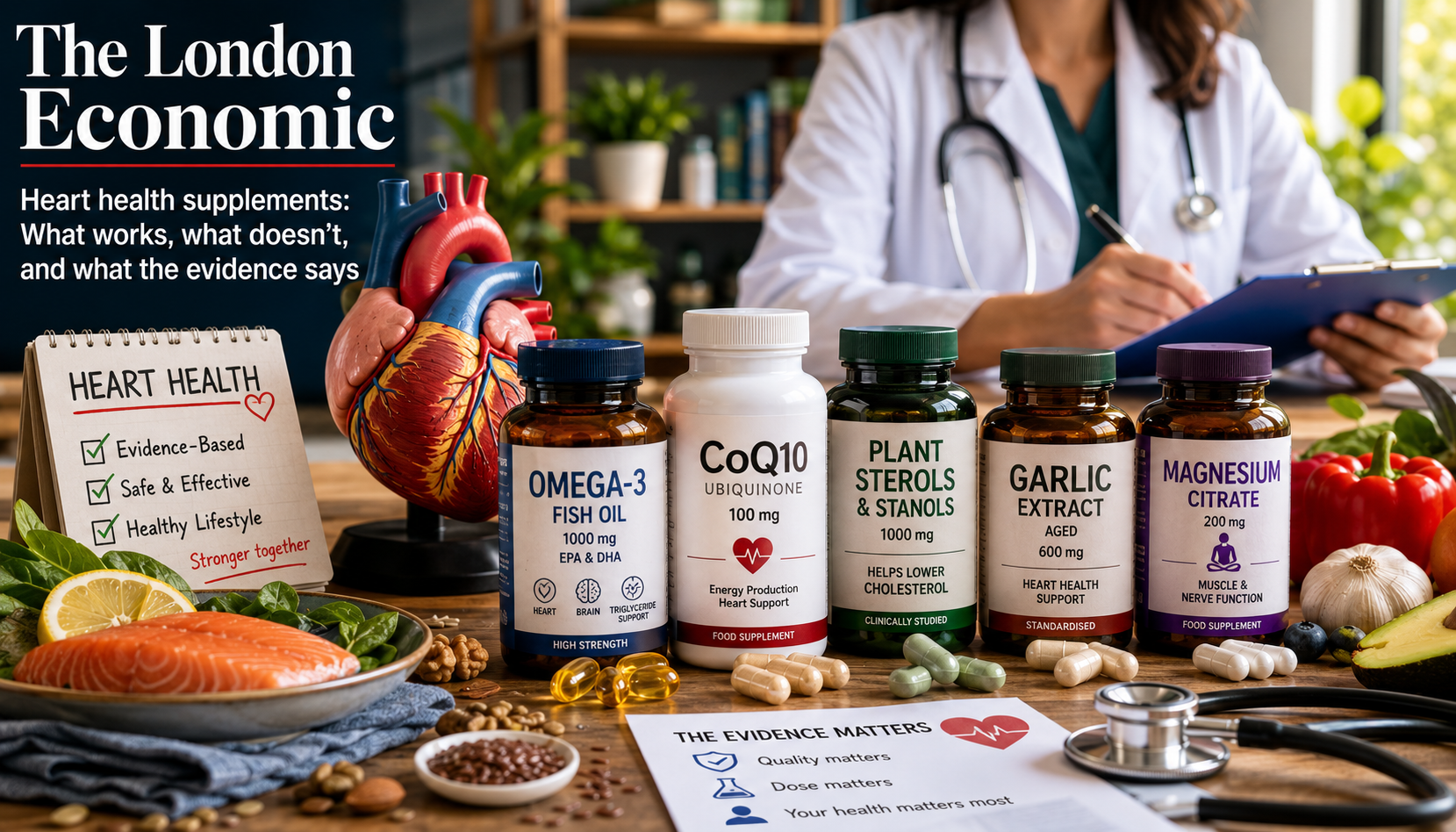
Heart Health Supplements
Walk into any pharmacy or health food shop in the UK and you will find an entire wall dedicated to heart health supplements: bottles promising to support circulation, maintain healthy cholesterol, boost energy, and protect your cardiovascular system, all without a prescription. Some of these products are backed by genuine, peer-reviewed evidence. Others are marketed on the strength of individual ingredient studies that do not translate into meaningful benefit at the doses actually used. A few are based on little more than plausible-sounding biochemistry dressed up in health claims that UK regulations technically permit.
This guide cuts through the marketing noise to give you an honest, evidence-based account of the cardiovascular supplements that have the strongest research support, the ones where evidence is mixed or limited, and the practical considerations that matter before adding anything to your daily routine. It draws on guidance from the British Heart Foundation, the National Health Service, and published clinical research rather than supplement industry sources.
Why Cardiovascular Health Matters: The UK Context
Heart and circulatory diseases remain the leading cause of death in the United Kingdom. According to the British Heart Foundation’s Heart and Circulatory Disease Statistics 2024 report, cardiovascular disease causes around 170,000 deaths in the UK each year, accounting for approximately a quarter of all deaths. An estimated 7.6 million people in the UK are living with a heart or circulatory disease.
These statistics matter for understanding why cardiovascular supplement marketing is so commercially powerful. Where health stakes are high and pharmaceutical options carry side effects that some patients find difficult, the appeal of a “natural” alternative is entirely understandable. The question is whether that appeal corresponds to genuine benefit, and the honest answer depends significantly on which supplement you are discussing.
It is also worth stating clearly at the outset: no dietary supplement currently available over the counter in the UK has been approved by the Medicines and Healthcare products Regulatory Agency (MHRA) as a treatment for any cardiovascular disease. This does not mean supplements are useless. It means they operate in a different evidential and regulatory space from licensed medicines, and that distinction matters when assessing claims.
Supplements With the Strongest Evidence Base
Omega-3 Fatty Acids (Fish Oil)
Omega-3 fatty acids, specifically EPA (eicosapentaenoic acid) and DHA (docosahexaenoic acid), are the best-studied cardiovascular supplements available. The evidence for their effects on triglyceride reduction is robust and consistent across multiple large clinical trials.
A landmark study, the REDUCE-IT trial published in the New England Journal of Medicine in 2018, found that high-dose prescription omega-3 (icosapentaenoic acid at 4g daily, marketed as Vascepa) reduced major cardiovascular events by 25 per cent in patients with elevated triglycerides who were already taking statin therapy. This was a significant finding for a specific high-risk population.
Standard over-the-counter fish oil supplements contain considerably lower EPA and DHA concentrations than the doses used in clinical trials showing cardiovascular benefit. The NHS currently recommends eating two portions of fish per week, one of which should be oily fish such as salmon, mackerel, or sardines, as a dietary approach to omega-3 intake. For those who cannot meet this through diet, a standard 1g fish oil supplement daily is widely considered a reasonable addition, though the evidence for cardiovascular event reduction at this dose is substantially weaker than at prescription doses.
Practical summary: Good evidence for triglyceride reduction at high doses. Dietary sources preferred where possible. Standard supplement doses provide modest benefit.
Coenzyme Q10 (CoQ10)
CoQ10 is a naturally occurring compound found in every cell of the body, concentrated particularly in the heart. It plays an essential role in cellular energy production within the mitochondria and functions as an antioxidant. The body produces CoQ10 naturally, but production declines with age.
The most clinically relevant application of CoQ10 supplementation involves statin medications. Statins, which are among the most widely prescribed drugs in the UK with an estimated seven to eight million people taking them, are known to reduce the body’s endogenous CoQ10 production as a side effect of their mechanism of action. Some patients on statins report muscle pain and fatigue, symptoms that have been attributed partly to CoQ10 depletion, though the evidence on whether CoQ10 supplementation reliably resolves statin-associated muscle symptoms remains mixed.
A 2015 meta-analysis published in the journal JACC: Heart Failure found that CoQ10 supplementation in patients with heart failure was associated with improved symptoms and reduced cardiovascular mortality, with the Q-SYMBIO trial showing a reduction in major adverse cardiovascular events at 300mg daily over two years.
The British Heart Foundation notes that while CoQ10 supplements are widely available and generally well tolerated, the evidence is most convincing for specific populations, particularly people with diagnosed heart failure and those experiencing muscle-related statin side effects, rather than the general population seeking cardiovascular support.
Practical summary: Best evidence in heart failure and as a potential support for statin users experiencing muscle symptoms. Widely tolerated. Less compelling evidence for general cardiovascular prevention.
Plant Sterols and Stanols
Plant sterols and stanols are structural components of plant cell membranes that, when consumed in sufficient quantities, reduce the absorption of cholesterol from the gut. They are found naturally in small amounts in vegetable oils, nuts, seeds, and grains, and are added in meaningful concentrations to specific functional foods including certain margarines, yoghurts, and milk products.
The evidence for LDL cholesterol reduction from plant sterols and stanols is among the most consistently supported in the dietary supplement and functional food space. The European Food Safety Authority (EFSA) has issued a positive opinion that plant sterol and stanol esters reduce blood LDL cholesterol, with an intake of 1.5 to 3g per day associated with a reduction of 7.5 to 12 per cent in LDL cholesterol levels.
This is a meaningful reduction and is recognised by NICE (the National Institute for Health and Care Excellence) as a useful dietary adjunct for people with elevated LDL cholesterol. Products fortified with plant sterols, such as Flora ProActiv and Benecol, are available in UK supermarkets and carry approved health claims under UK food labelling regulations.
Practical summary: Strong, well-replicated evidence for LDL cholesterol reduction at 1.5 to 3g daily. Recognised by EFSA and NICE. Available as functional foods rather than pills in most UK applications.
Supplements Where Evidence Is Mixed or Limited
Magnesium
Magnesium is involved in over 300 enzymatic reactions in the body, including processes related to heart rhythm regulation and blood pressure. Genuine magnesium deficiency, which is more common than widely recognised, is associated with increased cardiovascular risk.
The difficulty with magnesium supplementation for cardiovascular health is that the evidence for benefit is most consistent in populations who are actually deficient. For people with adequate dietary magnesium intake, supplementation produces less clear benefit. A 2016 meta-analysis published in the European Journal of Clinical Nutrition found an association between higher dietary magnesium intake and reduced risk of cardiovascular disease, but dietary associations do not translate straightforwardly into evidence that supplementation confers the same benefit.
People at higher risk of magnesium deficiency include those with type 2 diabetes, individuals taking diuretics or proton pump inhibitors, older adults, and people with gastrointestinal conditions affecting absorption. For these groups, a magnesium supplement of 200 to 400mg daily may be beneficial. For others, the priority should be dietary sources including dark leafy vegetables, nuts, seeds, and wholegrains.
Practical summary: Strong rationale in deficient individuals. Less compelling evidence for benefit in those with adequate dietary intake. Assess whether deficiency risk applies before supplementing.
Garlic Extract
Garlic has been used in traditional medicine across cultures for millennia and has attracted substantial modern research interest, particularly regarding blood pressure and cholesterol. Several meta-analyses have found modest reductions in both systolic blood pressure and LDL cholesterol associated with garlic supplementation.
A 2016 meta-analysis published in the Journal of Nutrition found that garlic supplementation produced a small but statistically significant reduction in total cholesterol in participants with elevated baseline levels. A 2020 meta-analysis in the journal Experimental and Therapeutic Medicine found modest blood pressure reductions in hypertensive individuals.
The effects are real but modest. They are also inconsistent across trials, partly because garlic preparations vary considerably in their allicin content, the compound believed responsible for most cardiovascular effects. Aged garlic extract and standardised allicin supplements produce more reliable results than raw garlic or unstandardised preparations.
Practical summary: Modest evidence for small blood pressure and cholesterol reductions. Effects are meaningful as part of a broader dietary strategy but should not be expected to substitute for medication in clinically significant hypertension or hypercholesterolaemia.
Berberine
Berberine is an alkaloid compound found in several plants including barberry, goldenseal, and Oregon grape. It has attracted significant research attention in recent years, with studies suggesting effects on blood glucose regulation, lipid profiles, and blood pressure.
A 2015 meta-analysis in the journal Phytomedicine found that berberine supplementation was associated with reduced total cholesterol, LDL cholesterol, and triglycerides alongside modest improvements in HDL cholesterol. Some researchers have noted structural similarities between berberine’s effects on cellular pathways and those of metformin, a first-line diabetes medication.
The limitation is that most berberine trials are small, conducted primarily in Chinese populations, and vary significantly in the preparations and doses used. Berberine also has clinically significant interactions with several medications including cyclosporine, anticoagulants, and some diabetes medications. It should not be used alongside prescription medicines without medical supervision.
Practical summary: Promising research, particularly for lipid management, but evidence base is less robust than for plant sterols or omega-3s. Drug interaction risk is real and requires medical guidance before use.
Supplements With Weak or Insufficient Evidence
Antioxidant Vitamins (Vitamin E and Vitamin C)
The antioxidant hypothesis, that oxidative stress contributes to cardiovascular disease and that antioxidant supplements should therefore reduce cardiovascular risk, was highly influential in nutrition research through the 1980s and 1990s. Large-scale clinical trials subsequently failed to confirm it.
The Heart Protection Study, one of the largest cardiovascular trials ever conducted in the UK with over 20,000 participants, found that antioxidant vitamin supplementation (vitamin E, vitamin C, and beta-carotene) produced no reduction in cardiovascular mortality or major vascular events, even in participants with high oxidative stress markers. Similar null results emerged from multiple other large trials.
Current NHS and British Heart Foundation guidance does not recommend antioxidant vitamin supplements for cardiovascular prevention, and some evidence suggests that high-dose vitamin E supplementation may actually increase risk in certain populations.
Practical summary: Large, well-conducted trials found no cardiovascular benefit. Not recommended for cardiovascular prevention by NHS or BHF.
Most Proprietary “Heart Health” Blend Supplements
A specific concern worth raising directly: the cardiovascular supplement market includes a large number of proprietary blended products that combine multiple ingredients at doses below those used in clinical trials, relying on the halo effect of ingredient names that have research associations even when the doses in the product do not match the researched quantities.
A supplement that contains 50mg of CoQ10, 100mg of L-Arginine, and trace quantities of several plant extracts is not the same thing as the 300mg of CoQ10 used in the Q-SYMBIO trial, or the high-dose omega-3 used in the REDUCE-IT trial. The evidence for individual ingredients at researched doses does not automatically transfer to proprietary blends at lower and variable concentrations.
The MHRA’s guidance on dietary supplement marketing is clear: products cannot make claims to treat, prevent, or cure any disease. Claims are restricted to “nutritional and health claims” as defined under UK food regulations, which permit broad statements about “contributing to normal cardiovascular function” without requiring the same evidentiary standard as a licensed medicine. Consumers should read these claims with that regulatory context in mind.
Practical Guidance: Before You Buy
If you are considering cardiovascular supplements, the following steps reflect best practice as outlined by the British Heart Foundation and NHS guidance:
- Speak to your GP or pharmacist first. This matters particularly if you are taking any prescribed medications, as several cardiovascular supplements including berberine, CoQ10, and fish oil at high doses have clinically relevant drug interactions.
- Address lifestyle foundations first. No supplement produces cardiovascular benefit comparable to smoking cessation, regular physical activity, dietary improvement, and maintaining a healthy weight. Supplements that accompany a healthy lifestyle may provide additional support; supplements that substitute for it will not.
- Look for products with third-party quality certification. Because dietary supplements are not regulated to pharmaceutical standards in the UK, manufacturing quality varies. Products certified by organisations including NSF International, the United States Pharmacopeia (USP), or Informed Sport have been independently tested for ingredient accuracy and contamination.
- Match dose to evidence. Check that the doses in any product you consider match those used in the clinical trials you have read about. A product containing 50mg of an ingredient shown to be effective at 300mg is not providing an equivalent benefit.
- Be sceptical of proprietary blend marketing. If a product does not disclose individual ingredient quantities, citing only a “proprietary blend,” it is impossible to assess whether any ingredient is present at a clinically meaningful dose.
Comparison Table: Key Cardiovascular Supplements
| Supplement | Primary Evidence | Recommended Dose Range | Drug Interactions | BHF/NHS Position |
|---|---|---|---|---|
| Omega-3 (EPA/DHA) | Triglyceride reduction (strong at high doses) | 1g daily (OTC); up to 4g (prescription) | Blood thinners (anticoagulants) | Dietary sources preferred; supplements reasonable |
| CoQ10 | Heart failure, statin-related symptoms | 100 to 300mg daily | Warfarin, statins | Potentially useful in heart failure and statin users |
| Plant sterols/stanols | LDL cholesterol reduction (strong) | 1.5 to 3g daily | None significant | Recognised by EFSA and NICE |
| Magnesium | Blood pressure (in deficient individuals) | 200 to 400mg daily | Antibiotics, diuretics | Useful if deficient; assess dietary intake first |
| Garlic extract | Modest BP and cholesterol reduction | Standardised allicin preparation | Blood thinners | May complement dietary approach |
| Berberine | Lipid management (promising but limited) | 500mg twice daily | Multiple significant interactions | Medical supervision required |
| Vitamin E/C | No cardiovascular benefit in large trials | Not recommended | None significant | Not recommended for CV prevention |
Key Takeaways
- Cardiovascular disease causes around 170,000 deaths annually in the UK, making it the country’s leading cause of death. This context explains the market for heart health supplements but should not lead to uncritical acceptance of supplement claims.
- Plant sterols and stanols have the strongest and most consistent evidence base for LDL cholesterol reduction, with EFSA-approved health claims at 1.5 to 3g daily.
- Omega-3 fatty acids have strong evidence for triglyceride reduction, particularly at high prescription doses. Standard OTC doses are a reasonable addition but produce more modest effects.
- CoQ10 has meaningful evidence specifically in heart failure patients and as potential support for statin users experiencing muscle symptoms.
- High-dose antioxidant vitamins have been tested in large clinical trials and found to provide no cardiovascular benefit. They are not recommended by the NHS or British Heart Foundation for cardiovascular prevention.
- No supplement is a substitute for prescribed cardiovascular medications, and several have clinically significant drug interactions requiring medical guidance before use.
Frequently Asked Questions
Are heart health supplements regulated in the UK? Dietary supplements in the UK are regulated as food products under food safety legislation, not as medicines. They do not require clinical trial evidence before sale and cannot legally claim to treat or prevent any disease. The MHRA regulates products that make medicinal claims, but most supplements are careful to use “nutritional and health claims” permitted under food regulations instead.
Should I take CoQ10 if I am on statins? Some people taking statins experience muscle pain or fatigue that may be related to CoQ10 depletion. CoQ10 supplementation is widely used in this context and is generally well tolerated. The evidence for whether it reliably resolves statin-related muscle symptoms is mixed, but the risk-benefit profile is favourable enough that many healthcare professionals consider it reasonable to try. Speak to your GP before starting.
Do omega-3 supplements reduce heart attack risk? The evidence is complicated. High-dose prescription omega-3 (specifically icosapentaenoic acid at 4g daily) reduced cardiovascular events in the REDUCE-IT trial in high-risk patients. Standard OTC fish oil supplements at 1g daily have not consistently shown the same benefit in clinical trials. Dietary intake of oily fish is recommended by the NHS as preferable to supplementation where possible.
What is the best supplement for high cholesterol? Plant sterols and stanols have the strongest evidence base for LDL cholesterol reduction among available dietary supplements, with a 7.5 to 12 per cent reduction associated with 1.5 to 3g daily intake as confirmed by the European Food Safety Authority. They are available in fortified foods including certain margarines and yoghurts. They are a complement to, not a substitute for, medical treatment where cholesterol is clinically elevated.
Are “heart health blend” supplements worth buying? Most proprietary heart health blends combine multiple ingredients at doses below those used in clinical trials. The evidence for individual ingredients does not automatically transfer to lower-dose blends. Consumers are better served by single-ingredient products at evidence-based doses than by blends of uncertain potency. Always check that individual ingredient quantities are disclosed rather than hidden within a “proprietary blend.”
Can I take cardiovascular supplements alongside prescribed heart medications? Not without medical guidance. Several cardiovascular supplements including berberine, high-dose fish oil, CoQ10, and garlic extract have clinically significant interactions with common heart medications including warfarin, statins, and antihypertensives. Always consult your GP or pharmacist before adding any supplement to a regimen that includes prescription cardiovascular medication.
How long does it take for cardiovascular supplements to show effects? This varies considerably by supplement and individual. Plant sterols and stanols show measurable LDL cholesterol effects within two to three weeks of consistent intake at effective doses. CoQ10 effects in heart failure studies were assessed over two years. Omega-3 effects on triglycerides typically become measurable within four to eight weeks. No supplement produces rapid or dramatic cardiovascular changes; realistic expectations and consistency of use matter more than short-term assessment.
Conclusion
The honest conclusion about cardiovascular supplements is that the picture is neither as bleak as pharmaceutical sceptics might claim nor as bright as supplement marketing suggests. Some products, particularly plant sterols and stanols, high-dose omega-3 fatty acids, and CoQ10 for specific populations, have genuine, replicated evidence behind them. Others, including most proprietary blended supplements and high-dose antioxidant vitamins, either lack convincing evidence or have been tested in large trials and found wanting.
The most useful frame for thinking about cardiovascular supplements is as adjuncts to, not substitutes for, lifestyle foundations and prescribed medical care. A person who smokes, is sedentary, and eats a diet high in saturated fat will not meaningfully protect their cardiovascular system with omega-3 capsules. A person who has already addressed those foundations and is looking for additional, evidence-based nutritional support may find specific supplements a reasonable addition to their routine.
Making that distinction, between the supplements that have earned their place on the shelf and those that rely on plausible-sounding biochemistry and weak regulatory oversight, requires exactly the kind of evidence literacy that the supplement industry rarely encourages. This guide aims to provide some of that foundation.
About the Author