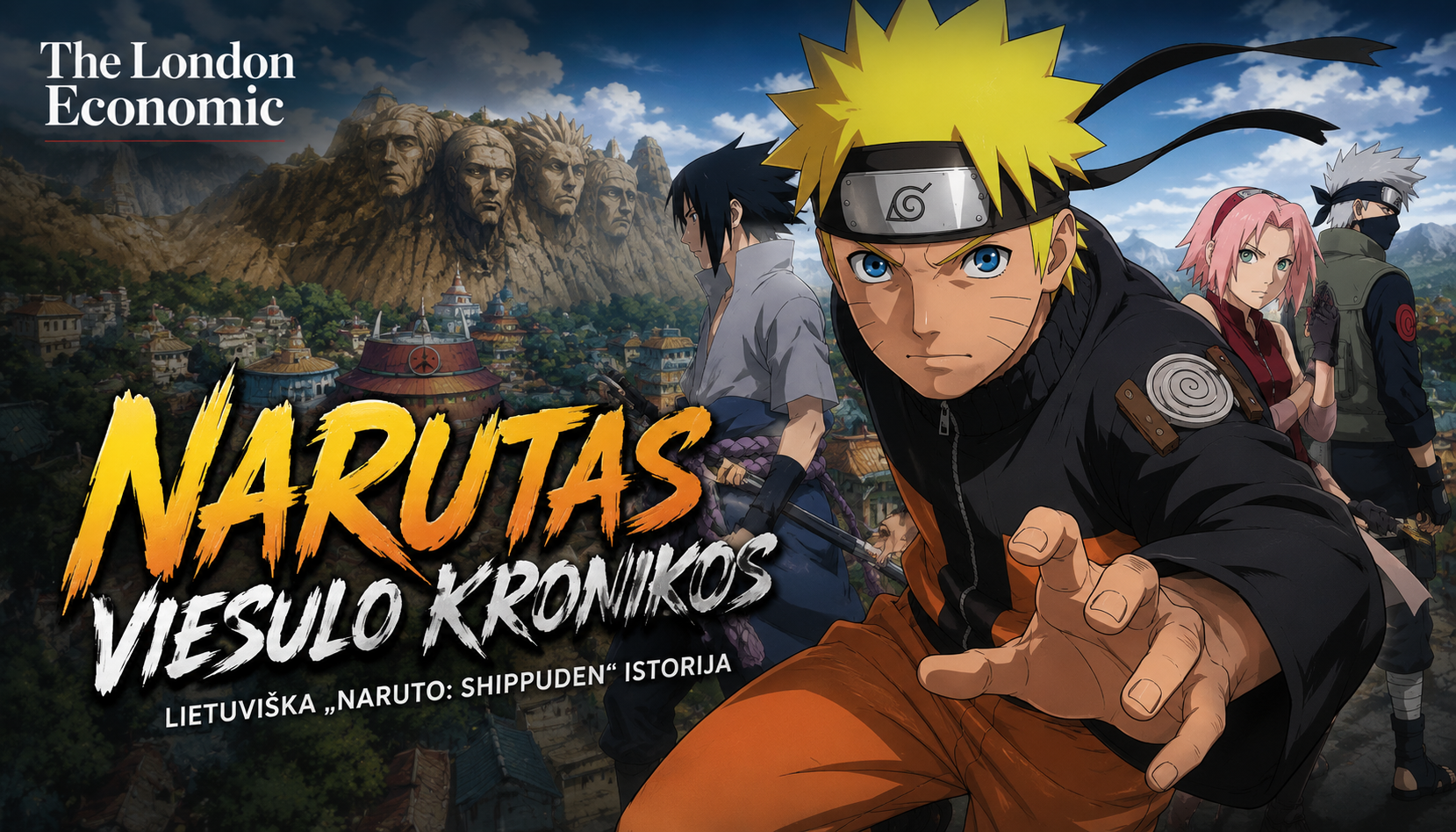
Narutas Viesulo Kronikos
Narutas Viesulo Kronikos is a phrase that generates genuine curiosity among readers who encounter it, because it sounds both familiar and unfamiliar at the same time. The answer to what it is turns out to be both simple and genuinely interesting. Narutas Viesulo Kronikos is the Lithuanian localised title for Naruto: Shippuden, one of the most celebrated anime series ever produced, adapted for Lithuanian audiences with a full voice-over and broadcast on BTV from 2013. It is not a separate or original series. It is the same story, the same 500 episodes, and the same characters as the internationally known Naruto: Shippuden, experienced through the Lithuanian language.
Understanding why this title exists and what it means for Lithuanian culture, anime localisation, and global storytelling is the purpose of this guide. Whether you are discovering Narutas Viesulo Kronikos for the first time or revisiting a series that defined your teenage years, this article covers everything that matters.
What Does Narutas Viesulo Kronikos Mean?
The phrase breaks into three components, each carrying its own meaning in Lithuanian.
Narutas is simply the Lithuanian adaptation of Naruto, the protagonist’s name, adjusted to fit Lithuanian grammatical conventions where names often take the genitive suffix. Viesulo derives from the Lithuanian word for hurricane or whirlwind, a word that carries connotations of intense force, unstoppable momentum, and dramatic change. Kronikos means chronicles or records, emphasising the episodic, documentary quality of a long narrative journey.
Together, the full phrase translates roughly as Chronicles of the Storm, or more precisely as Chronicles of the Hurricane. Both translations capture the same essence: a sweeping, storm-like narrative documenting the journey of a young ninja through trials, losses, friendships, and transformation.
This is not a literal word-for-word translation of Naruto: Shippuden, the Japanese title, which itself means something closer to Naruto: Hurricane Wind or Naruto: Gale Wind. The Lithuanian localisation team made a creative decision to render the spirit of the title in a way that felt natural and resonant for Lithuanian speakers rather than simply transliterating the Japanese. That decision reflects the broader philosophy of the localisation project: accessibility over literalism.
What Is the Series About?
Narutas Viesulo Kronikos is the Lithuanian title for Naruto: Shippuden, the sequel to the original Naruto anime series. The series consists of 500 episodes, including canon and filler content. The original Japanese series aired between 2007 and 2017.
The story picks up approximately two and a half years after the events of the original Naruto series. At the start of Narutas Viesulo Kronikos, Naruto Uzumaki returns to the Hidden Leaf Village after training with his mentor, Jiraiya. The once mischievous and underestimated boy is now a capable ninja, ready to face greater dangers.
The world he returns to is defined by two parallel pressures. A dangerous criminal organisation known as Akatsuki has begun capturing powerful tailed beasts. Since Naruto himself contains the Nine-Tailed Fox spirit, he becomes one of their primary targets. At the same time, Naruto’s most personal mission remains unchanged: bringing back his former teammate and friend Sasuke Uchiha, who abandoned the village to pursue power through darker means.
What separates Narutas Viesulo Kronikos from ordinary action animation is its thematic ambition. Unlike many long-running anime series, this story does more than simply showcase battles. It explores grief, revenge, forgiveness, destiny, leadership, and the painful cost of war. These themes are woven into every major arc, making it a series that rewards emotional engagement rather than just surface-level excitement.
The Lithuanian Broadcast History
The original Naruto series was broadcast under the title Narutas on LNK starting in 2008. By introducing Shippuden as Narutas Viesulo Kronikos, the network kept the fan community engaged and eager for the next chapter.
Narutas Viesulo Kronikos premiered on the BTV television channel in 2013 and continued the story that many Lithuanian viewers already knew from the earlier series Narutas.
The delay between the original Japanese broadcast, which began in 2007, and the Lithuanian adaptation in 2013 was typical of European anime localisation at the time. Licensing, translation, and voice-over production all take considerable time and resource, and smaller language markets like Lithuania receive adaptations later than English-speaking markets. Despite the gap, the arrival of Narutas Viesulo Kronikos was met with genuine enthusiasm from a viewer base that had already developed strong attachment to the characters through the earlier series.
At the time, streaming platforms were not dominant in Lithuania. Television broadcasts played a crucial role in shaping anime culture. Narutas Viesulo Kronikos became one of the most recognisable anime titles on Lithuanian TV, alongside other localised animated series.
The Lithuanian Voice-Over: How Localisation Worked
One of the most distinctive aspects of Narutas Viesulo Kronikos as a cultural product is the approach taken to its localisation.
Instead of attempting a direct imitation of Japanese voice acting, the localisation team focused on character emotions adapted for European audiences, dialogue pacing matched to Lithuanian speech patterns, and priority placed on storytelling over exaggerated anime expressions. This approach helped the series appeal to a broad demographic, including children and casual viewers.
This philosophy distinguishes Narutas Viesulo Kronikos from simply subtitled or mechanically dubbed content. The creative decisions made by the Lithuanian team, from casting voice actors whose registers suited each character to adapting cultural expressions that would not translate naturally, gave the series a texture and authenticity in Lithuanian that earned it genuine affection rather than tolerance from its audience.
The voice actors captured Naruto’s determination, Sakura’s courage, Kakashi’s wisdom, and the emotional weight of each confrontation. Even without knowing Japanese, viewers could feel the depth and authenticity of each scene.
The Major Story Arcs
Narutas Viesulo Kronikos covers a vast narrative spanning 500 episodes, but certain story arcs stand out as defining moments both for the series and for Lithuanian audiences who followed it.
The Kazekage Rescue Arc
The opening arc of Shippuden establishes the series’ tone immediately. One of the earliest emotional arcs involves saving Gaara, the Kazekage of the Sand Village. This storyline highlights themes of sacrifice, redemption, and friendship. It also demonstrates how far Naruto has grown as a ninja and as a leader. For Lithuanian viewers who had followed Gaara’s complex journey in the original series, this arc carried particular emotional weight.
The Akatsuki Pursuit Arc
The organisation’s systematic threat creates sustained tension across multiple arcs. New antagonists are introduced with distinct philosophies and abilities, raising the moral complexity of the conflict beyond simple good versus evil confrontation.
Pain’s Assault Arc
Perhaps most memorably, the Pain’s Assault arc delivered one of the most emotional moments in anime history, as Naruto confronted an enemy who had devastated his home. One of the most talked-about moments among Lithuanian fans was the Pain storyline. The destruction of the village and Naruto’s emotional confrontation left a strong impression and sparked intense discussion online.
This arc addresses the cycle of hatred and revenge with a seriousness rarely seen in action animation aimed at younger audiences. Naruto’s response to Pain represents one of the most thematically complete moments in the entire series.
The Fourth Great Ninja War Arc
The series builds toward a conflict of global scale in which virtually every character from across the narrative’s history plays a role. Questions about the nature of peace, the cost of inherited hatred, and the possibility of breaking cycles of violence are all addressed in this culminating arc.
The Key Characters of Narutas Viesulo Kronikos
Naruto Uzumaki
Naruto’s evolution is the emotional backbone of the series. Once seen as a reckless outcast, he becomes a symbol of resilience and unity. His defining quality throughout is a refusal to abandon anyone, even those who have abandoned him. That quality is simultaneously his greatest strength and the source of his deepest pain.
Sasuke Uchiha
Sasuke represents the darker path driven by revenge, isolation, and internal conflict. His journey contrasts sharply with Naruto’s optimism. The tension between these two characters, who understand each other better than anyone else understands either of them, drives much of the series’ emotional core.
Sakura Haruno
Often underestimated, Sakura’s development into a skilled medical ninja reflects the theme of inner strength and growth. Her arc in Shippuden addresses the cost of defining oneself through another person’s absence and the difficulty of choosing one’s own path.
Kakashi Hatake
Team Seven’s leader carries the weight of loss throughout the series. His wisdom, pragmatism, and occasional warmth provide an anchor for the younger characters as they navigate increasingly dire circumstances.
The Akatsuki
The antagonist organisation includes characters whose motivations are genuinely complex: figures who pursued peace through methods that required them to become the very thing they sought to prevent. Nagato Pain in particular is one of the most philosophically developed antagonists in modern anime.
The Cultural Impact in Lithuania
The popularity of Narutas Viesulo Kronikos also encouraged more anime titles to be considered for Lithuanian broadcasts and dubbing efforts, helping expand the anime landscape locally.
Before its broadcast, anime remained a niche interest with limited exposure. But as Naruto’s powerful story unfolded in Lithuanian-language broadcasts, the series reached mainstream attention. The series bridged cultural barriers by presenting Japanese storytelling in the local language, built a generation of fans who bonded over episodes and characters, and contributed to anime’s acceptance as a form of serious storytelling rather than niche entertainment.
Friends talked about it at school, fans argued about characters online, and anime slowly moved from niche entertainment into something widely accepted and loved.
This shift in cultural perception is significant. Narutas Viesulo Kronikos did not simply entertain Lithuanian audiences. It changed how they understood animation as a storytelling medium, opening the door for subsequent anime titles to receive the kind of reception in Lithuania that would previously have been unlikely.
Why Narutas Viesulo Kronikos Continues to Attract Interest in 2026
The phrase narutas viesulo kronikos has been showing up in search trends, leaving many people wondering whether it is a new anime or something entirely different. The continued search interest reflects several converging factors.
Nostalgia among viewers who grew up watching the BTV broadcast drives significant organic search interest. For anyone who watched Narutas Viesulo Kronikos as a child or teenager in Lithuania, the phrase carries personal significance that keeps it active in memory and in search behaviour.
Global Naruto interest remains strong. The franchise continues through Boruto: Naruto Next Generations, which follows the next generation, and through merchandise, games, and anniversary content that regularly returns the original series to public attention. Each wave of renewed global interest produces a corresponding wave of search activity for the Lithuanian title.
The ongoing confusion about what the phrase means, whether it is a separate series or simply a localised title, creates persistent search demand from readers who want a clear explanation. That clarity is what this guide provides.
Is Narutas Viesulo Kronikos Different From Naruto: Shippuden?
The answer is unambiguous. Narutas Viesulo Kronikos is simply the Lithuanian localised title for Naruto: Shippuden. The story, characters, and episodes are all identical. Only the language and title differ.
No storylines were altered for the Lithuanian broadcast. Based on available information, the Lithuanian voice-over followed the same overall plot as the original Naruto: Shippuden. There is no confirmed evidence of major edits or altered storylines.
For anyone who has watched Naruto: Shippuden in any other language, the content of Narutas Viesulo Kronikos is familiar. For anyone who watched it in Lithuanian, it is identical in story and structure to the series that millions of viewers experienced globally.
Key Takeaways
- Narutas Viesulo Kronikos is the Lithuanian localised title for Naruto: Shippuden, the second major arc of Masashi Kishimoto’s Naruto anime series. It is not a separate or original production.
- The title translates roughly as Chronicles of the Hurricane or Chronicles of the Storm in English. Viesulo means hurricane or whirlwind, and kronikos means chronicles.
- The series premiered on the Lithuanian television channel BTV in 2013 with a full Lithuanian voice-over, several years after the original Japanese broadcast began in 2007.
- The original Naruto series had aired in Lithuania on LNK from 2008 under the title Narutas, giving Narutas Viesulo Kronikos an established audience from the outset.
- The series consists of 500 episodes covering Naruto Uzumaki’s journey from his return after training through the Fourth Great Ninja War and beyond.
- The Lithuanian localisation prioritised emotional authenticity and natural speech pacing over literal translation, making the series genuinely accessible to audiences unfamiliar with anime conventions.
- Narutas Viesulo Kronikos had a measurable cultural impact in Lithuania, contributing to the mainstreaming of anime as a respected storytelling form and inspiring a generation of fans.
- Continued search interest in 2026 is driven by nostalgia, ongoing global Naruto franchise activity, and persistent curiosity about what the Lithuanian phrase actually means.
Frequently Asked Questions
What does Narutas Viesulo Kronikos mean?
It is the Lithuanian localised title for Naruto: Shippuden. The phrase translates roughly as Chronicles of the Hurricane or Chronicles of the Storm. Viesulo means hurricane or whirlwind, and kronikos means chronicles. Narutas is the Lithuanian adaptation of the name Naruto.
Is Narutas Viesulo Kronikos a different anime from Naruto: Shippuden?
No. It is the same series. Narutas Viesulo Kronikos is simply the Lithuanian title for Naruto: Shippuden. The story, characters, and episodes are identical. Only the language of broadcast and the adapted title differ.
When did Narutas Viesulo Kronikos air in Lithuania?
The series premiered on the BTV television channel in 2013. This followed the earlier broadcast of the original Naruto series on LNK from 2008, where it was known simply as Narutas.
How many episodes does Narutas Viesulo Kronikos have?
The series has 500 episodes in total, covering the complete Naruto: Shippuden story from Naruto’s return after training to the conclusion of the Fourth Great Ninja War and the series finale.
Who created Naruto: Shippuden, which Narutas Viesulo Kronikos is based on?
The series was created by Masashi Kishimoto, based on his manga series Naruto, which was serialised in Shueisha’s Weekly Shonen Jump from 1999 to 2014. The anime adaptation was produced by Studio Pierrot.
What are the most memorable arcs in Narutas Viesulo Kronikos?
Among Lithuanian fans, the most discussed arcs include the Kazekage Rescue Arc, the Akatsuki Pursuit storylines, and particularly the Pain’s Assault Arc, which many viewers cite as the emotional high point of the entire series.
Where can I watch Narutas Viesulo Kronikos today?
The original BTV broadcast is no longer airing. The series may be available through Lithuanian streaming platforms depending on current regional licensing. The original Japanese version with subtitles and the English dub are available on Crunchyroll and other major anime streaming services internationally.
Should I watch the original Naruto before Narutas Viesulo Kronikos?
Yes. Watching the original Naruto series first is strongly recommended. Narutas Viesulo Kronikos, as a direct continuation, assumes familiarity with the characters’ backstories, relationships, and earlier story events. Beginning with Shippuden without that context significantly reduces the emotional impact of many key moments.
Conclusion
Narutas Viesulo Kronikos occupies a specific and meaningful place in the history of anime localisation and in Lithuanian popular culture. It is not simply a dubbed version of an internationally successful series, though it is that too. It is a cultural artefact that reflects a particular moment when Japanese storytelling found its way into Lithuanian living rooms and school playgrounds through the medium of a carefully crafted local adaptation.
The series itself needs no qualification. Naruto: Shippuden is widely recognised as one of the most complete and emotionally ambitious long-form animated narratives ever produced, covering 500 episodes across a decade of broadcast without losing its thematic coherence or its commitment to genuine character development. Its exploration of grief, revenge, forgiveness, and the possibility of peace through understanding remains relevant to every generation that encounters it.
For Lithuanian viewers, Narutas Viesulo Kronikos was the specific vessel through which those themes arrived. The Lithuanian voice actors, the adapted title, the BTV broadcast schedule, and the shared experience of following Naruto’s journey in their own language gave the series a particular resonance that the internationally distributed version simply could not replicate.
In 2026, the phrase continues to surface in search results because the people who grew up with it have not forgotten it, and because the story it describes remains one of the most enduring in modern animation. Both facts speak well for what the localisation achieved.
About the Author