Irri Sys
Irri sys is shorthand for irrigation systems, and in 2026 the term has become closely associated with a new generation of smart, sensor-driven, data-led water management technology that is reshaping agriculture, commercial horticulture, and domestic gardening across the United Kingdom and globally. If you have encountered the phrase in a search, a product specification, or an agricultural technology discussion and want to understand what it actually means, how these systems work, and whether they are worth considering, this guide covers everything clearly and honestly.
The urgency behind irri sys adoption has never been greater. Agriculture accounts for approximately 70 per cent of global freshwater consumption, while traditional irrigation methods routinely waste between 30 and 50 per cent of the water they use through evaporation, runoff, and imprecise application. With UK water bills rising and drought conditions becoming more frequent even in traditionally wet climates, the case for smarter water management is compelling at every scale, from a smallholder’s polytunnel to a thousand-hectare arable farm.
What Is Irri Sys?
Irri sys is an abbreviation commonly used for irrigation systems. It refers to all components, technologies, and practices involved in delivering water to soil or plants effectively and efficiently.
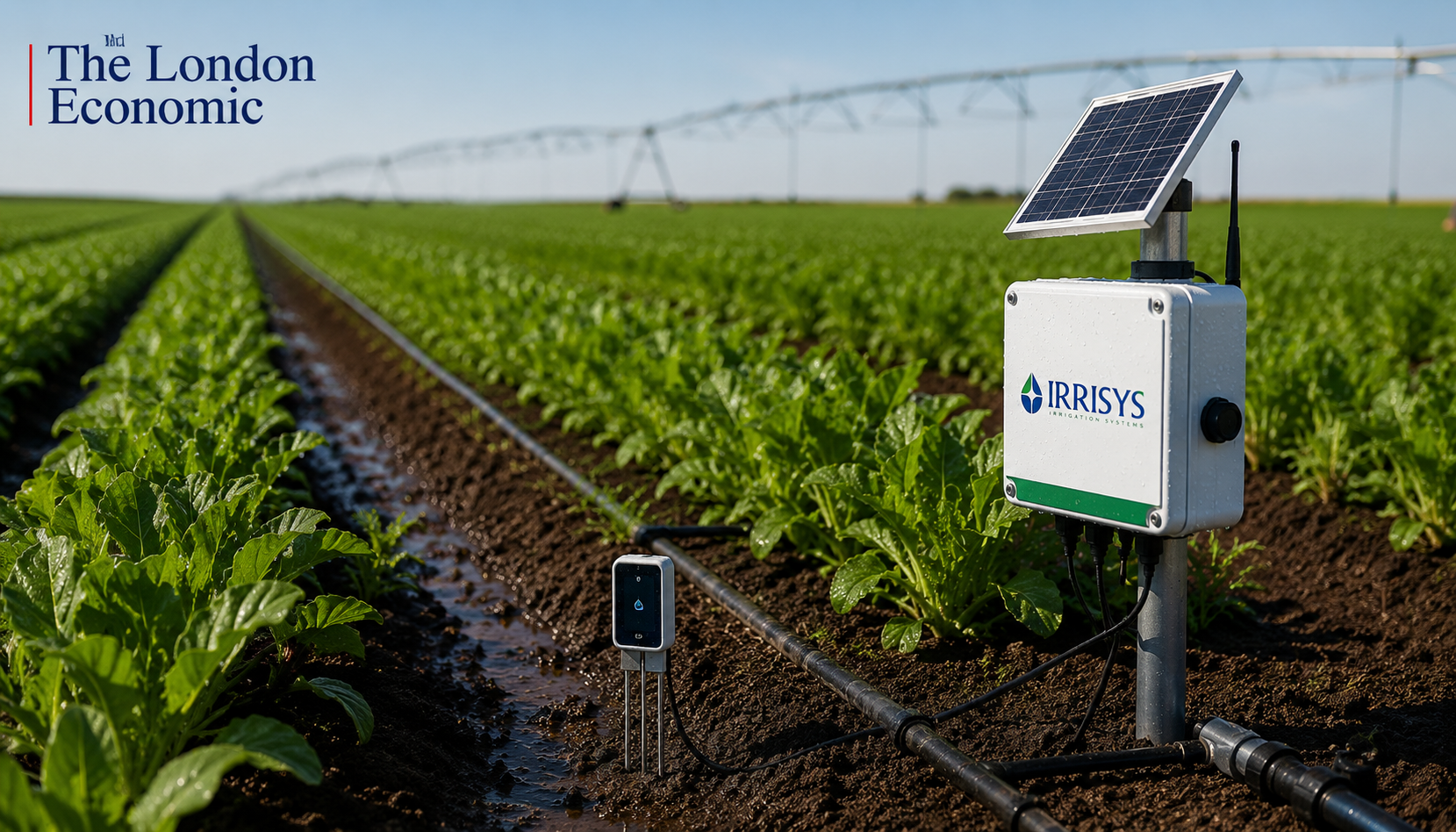
The term covers a broad category rather than a single product. In its most basic form, an irri sys might be a drip irrigation setup controlled by a simple timer. In its most advanced form, it is a fully integrated platform combining soil moisture sensors, weather forecasting APIs, machine learning algorithms, automated valve controls, and remote smartphone management into a system that makes real-time watering decisions with minimal human input.
What distinguishes modern irri sys solutions from traditional irrigation is the shift from time-based scheduling to condition-based scheduling. Older systems water crops on a preset schedule regardless of what the soil and plants actually need. Smart irrigation systems water only when sensors confirm that moisture levels have dropped below a threshold that affects plant health. That difference alone can reduce water consumption by 30 to 50 per cent while improving crop outcomes.
The Core Components of a Modern Irri Sys
A fully functional modern irrigation system consists of several integrated components. Understanding each one helps buyers make informed decisions about what they actually need for their specific application.
Water source and pumps
Every irrigation system requires a reliable water source: a well, river, reservoir, borehole, or mains supply. Pumps pressurise and transport water through the system. The type and capacity required depends on the area being irrigated, the elevation change between source and field, and the flow rate the chosen delivery method demands.
Distribution infrastructure
Pipes and lateral lines transport water from the source to the irrigation zone. Materials include PVC, polyethylene, and metal, selected based on durability requirements, operating pressure, and cost. Drip systems use narrow-bore tubing and emitters at individual plant root zones. Sprinkler systems use larger bore pipework feeding overhead distribution heads.
Filtration
Filters prevent debris, sand, and organic matter from clogging emitters and sprinkler heads. Proper filtration is especially critical in drip and micro-irrigation systems where emitter apertures are small enough to block easily. In systems drawing water from open sources such as rivers or reservoirs, filtration is a non-negotiable component.
Valves and zone controls
Electronically operated solenoid valves regulate water flow to different irrigation zones, enabling a single system to serve areas with different crop types, soil conditions, and water requirements independently. Modern controllers can manage multiple valve zones simultaneously, scheduling each independently based on sensor data.
Sensors
This is where modern irri sys diverges most clearly from legacy irrigation. Sensors measure soil moisture at various depths, soil temperature, ambient air temperature, humidity, and rainfall. This real-time data feeds into the control system, enabling condition-based rather than time-based irrigation decisions. Some advanced systems also incorporate leaf wetness sensors and evapotranspiration models that calculate water loss from soil and plant surfaces.
Controllers and automation
Controllers are the brain of the system. They receive sensor data, apply programmed rules or machine learning algorithms, and trigger valve openings and closings accordingly. Modern controllers connect to the internet, allowing remote monitoring and adjustment through smartphone applications or web dashboards. Many also integrate with weather forecast services, automatically postponing scheduled irrigation when rain is predicted.
Emitters and delivery heads
At the point of application, water is delivered through drip emitters, micro-sprinklers, surface sprinklers, or subsurface lines depending on the system type and crop requirements. Selection depends on crop type, row spacing, soil infiltration rate, and the water application rate required.
Types of Irri Sys: Which Is Right for Your Situation?
There are several distinct types of irrigation system, each suited to different applications, scales, and crop types.
Drip irrigation
Drip irrigation delivers water directly to the root zone of each plant through small emitters positioned along narrow tubing. Because water is applied at the soil surface or below it, directly where roots can access it, evaporation losses are minimal and runoff is virtually eliminated. Drip is widely considered the most water-efficient irrigation method available, particularly for row crops, vegetables, fruit trees, vineyard production, and protected growing environments such as glasshouses and polytunnels.
The main limitation of drip is the upfront cost of installation and the maintenance discipline required to keep emitters clear of blockages. In high-value crop production, however, the water savings and yield improvements typically justify this investment within a single growing season.
Sprinkler systems
Sprinkler systems replicate rainfall by distributing water through overhead heads that spray across a defined area. They are suited to larger field crops, grass, lawns, and situations where individual plant targeting is impractical. Sprinkler systems range from fixed-head installations to rotating impact sprinklers and travelling raingun irrigators that move progressively across a field.
The efficiency of sprinkler systems is lower than drip because water is applied above the crop canopy, increasing evaporation losses particularly in warm or windy conditions. Scheduling sprinkler irrigation for early morning or evening reduces these losses significantly.
Surface irrigation
Surface irrigation allows water to flow across a field through furrows, basins, or channels under gravity. It is one of the oldest irrigation methods and remains in use for certain large-scale arable crops in areas where land topography and water availability make it practical. Water efficiency is generally lower than pressurised systems, and surface irrigation requires careful field levelling and management to avoid waterlogging or uneven coverage.
Subsurface irrigation
Subsurface drip delivers water below the soil surface directly into the root zone, further reducing evaporation compared with surface drip. It is particularly effective in high-value permanent crops such as orchards and vineyards and in situations where surface disturbance from irrigation lines would damage crops during field operations.
Smart and automated systems
Smart irrigation systems combine all of the above hardware types with sensor networks, automated controllers, weather integration, and remote management capability. They represent the state of the art in irri sys technology for 2026 and are available at scales from individual garden beds to thousands of hectares of commercial cropland.
A 2025 research project successfully integrated Arduino microcontrollers, Raspberry Pi platforms, and LSTM-based machine learning models to forecast future soil moisture conditions and convert predictions into precise irrigation commands, demonstrating the trajectory of technology in this space. Leading commercial smart irrigation controllers in 2026 include Rachio Smart Controllers, which use local weather intelligence and automated rain-skip functions, and Aiper IrriSense 2, offering multi-zone watering, precision mapping, and smartphone control with claimed water savings of up to 40 per cent.
The Benefits of Smart Irri Sys Adoption
The case for modern irrigation systems rests on several well-documented benefits that apply across agricultural, commercial, and domestic contexts.
Water conservation
Smart irrigation systems can reduce water usage by 30 to 50 per cent compared with traditional time-based methods. In UK domestic gardens, where water bills rose by an average of six per cent in April 2024 with further increases projected to push annual costs above £450 for many households by 2026, this saving has direct financial value. In commercial agriculture, where water abstraction licences are increasingly restricted and metered, the savings translate into meaningful cost reductions and regulatory compliance advantages.
Improved crop health and yield
Consistent, precisely timed irrigation prevents both water stress and overwatering, both of which damage plant health and reduce yields. Crops that receive the right amount of water at the right time grow more uniformly, produce better quality fruit and vegetables, and are less susceptible to soil-borne disease exacerbated by waterlogging. These outcomes translate directly into higher marketable yield from the same planted area.
Reduced labour costs
Automated systems remove the need for manual watering schedules and the labour required to operate them. In large-scale horticulture, this represents a significant operational cost saving. Even in domestic settings, automation removes the time burden of regular manual watering and eliminates the crop losses that accumulate when watering schedules are missed during busy periods or holidays.
Remote monitoring and control
Modern irri sys controllers connect to smartphone applications and web dashboards, enabling farmers and growers to monitor soil conditions and adjust irrigation schedules from anywhere with a mobile connection. This flexibility is particularly valuable across multiple sites or during busy harvest periods when physical presence at every irrigation zone is impractical.
Environmental sustainability
By reducing water waste, energy consumption from pumping, and the nutrient leaching that accompanies overwatering, smart irrigation systems reduce the environmental footprint of growing operations. This aligns with the growing regulatory pressure on agricultural water use in England, where the Environment Agency has progressively tightened abstraction licensing requirements.
Challenges and Limitations
Honest coverage of irri sys technology requires acknowledging its limitations alongside its benefits.
Installation cost
The upfront capital cost of a modern smart irrigation system is significantly higher than traditional methods. For commercial growers, this typically requires a business case supported by projected water savings, yield improvements, and labour cost reductions. For domestic users, entry-level smart controllers are now available at accessible price points, but a fully sensor-integrated garden system represents a meaningful investment.
Technical complexity
Setting up and maintaining a sensor-based irrigation system requires a degree of technical literacy that not all users possess. Sensor calibration, connectivity management, and controller programming can present barriers, particularly for smaller operations without dedicated technical staff. Many providers offer installation and commissioning services to address this.
Connectivity dependence
Smart systems that rely on mobile or internet connectivity for remote management are vulnerable to signal gaps in rural areas. Some systems operate locally without cloud dependence, providing a degree of resilience, but full functionality typically requires reliable broadband or mobile connectivity.
Maintenance requirements
Drip emitters require regular flushing and inspection to prevent blockage. Filter systems need periodic cleaning. Sensors require calibration and eventual replacement. These are manageable maintenance requirements but should be factored into the total cost of ownership calculation for any system.
Irri Sys and UK Agriculture in 2026
The relevance of smart irrigation technology to UK agriculture has increased considerably in recent years, driven by a combination of climate variability, water regulation, and rising input costs.
The UK has experienced increasingly variable summer rainfall patterns, with extended dry periods becoming more common in eastern and southern England in particular. The Drought and Water Scarcity Partnership, coordinated by the Environment Agency, has highlighted irrigated horticulture as a priority area for water efficiency improvement. The Environment Agency’s own guidance recommends that irrigators consider precision irrigation technology as part of their water resource management planning.
For UK growers making investment decisions, the government’s Farming Equipment and Technology Fund has in previous rounds included irrigation equipment as an eligible item, reflecting the policy recognition of water efficiency as a strategic agricultural priority. Prospective applicants should verify current fund eligibility on the government’s website, as scheme terms change between rounds.
Irri Sys in the Garden: What UK Homeowners Need to Know
Smart irrigation is no longer confined to commercial agriculture. UK homeowners are increasingly adopting automated garden irrigation systems, driven by rising water bills, hosepipe restrictions during dry summers, and a genuine desire to maintain healthy gardens with less time and effort.
Entry-level systems for domestic use typically consist of a programmable water timer connected to the outdoor tap, a supply line distributing water through the garden, and drip emitters or micro-sprinklers positioned at individual plants or in borders. More sophisticated domestic setups add soil moisture sensors and weather integration that automatically pause irrigation when rain falls or soil is already adequately moist.
Established UK brands in this space include Hozelock, which has been designing garden watering products for over sixty years and whose systems are specifically designed for the water pressure and climatic conditions typical in British gardens, and Gardena, which offers a range of modular automatic watering systems scalable from small balcony gardens to large properties.
| System type | Best for | Efficiency | Setup complexity | Cost range |
|---|---|---|---|---|
| Basic drip with timer | Domestic borders and containers | High | Low | £30 to £150 |
| Sprinkler with controller | Lawns, larger gardens | Moderate | Low to medium | £100 to £400 |
| Smart controller with sensors | Commercial horticulture, precision gardens | Very high | Medium to high | £200 to £2,000+ |
| Full field smart system | Agricultural production | Very high | High | £2,000 to £100,000+ |
Key Takeaways
- Irri sys is shorthand for irrigation systems, specifically encompassing modern smart and automated systems that use sensors, data, and automated controls to deliver water efficiently to plants and crops.
- Agriculture consumes approximately 70 per cent of global freshwater, and traditional irrigation methods waste 30 to 50 per cent of the water they use. Smart irri sys technology addresses this directly.
- The five main types of irrigation system are drip, sprinkler, surface, subsurface, and fully automated smart systems. Each suits different crops, scales, and budgets.
- Smart irrigation systems can reduce water usage by 30 to 50 per cent while improving crop health and yield through condition-based rather than time-based watering.
- Core components of a modern irri sys include water source and pumps, distribution infrastructure, filtration, zone valves, soil sensors, automated controllers, and delivery heads.
- UK domestic garden irrigation has become increasingly accessible and relevant, driven by rising water bills, hosepipe restrictions, and the growth of modular consumer irrigation products.
- Limitations include upfront installation cost, technical complexity, connectivity dependence in rural areas, and ongoing maintenance requirements.
- The UK government’s Farming Equipment and Technology Fund has in previous rounds supported irrigation investment. Current eligibility should be verified directly with the government.
Frequently Asked Questions
What does irri sys mean?
Irri sys is an abbreviation for irrigation system. It is commonly used as shorthand in agricultural, horticultural, and landscaping contexts to describe the full range of modern systems that deliver water to plants in a controlled, efficient, and often automated way.
What is the most efficient type of irri sys?
Drip irrigation combined with soil moisture sensing and automated control delivers the highest water efficiency of any commonly used irrigation method. It minimises evaporation and runoff by applying water directly to the root zone of each plant, and sensor integration ensures water is only applied when plants actually need it.
How much water can a smart irri sys save?
Smart irrigation systems consistently reduce water usage by 30 to 50 per cent compared with traditional time-based irrigation methods. Some manufacturers claim savings of up to 40 to 50 per cent under optimal conditions. The actual saving depends on the baseline method being replaced, crop type, climate, and system configuration.
Is a smart irrigation system worth installing in a UK garden?
For most UK gardens, even a basic drip system with a timer saves meaningful amounts of water and reduces the time spent on manual watering. A fully sensor-integrated smart system offers the greatest efficiency and lowest maintenance once set up, but represents a higher initial investment. With UK water bills rising consistently, the payback period is shortening.
Do irri sys sensors work in the UK climate?
Yes. Soil moisture sensors, weather integration, and automated controllers are designed to work across a wide range of climates. In the UK specifically, weather-integration features that automatically skip irrigation when rain is forecast or has recently fallen are particularly valuable given the variable nature of British rainfall.
What government support is available for irri sys in UK agriculture?
The government’s Farming Equipment and Technology Fund has in previous rounds included irrigation equipment as an eligible category. Current eligibility, application windows, and grant rates should be verified directly with the UK government’s farming grants guidance, as scheme terms are updated between rounds.
Can irri sys be used for small domestic gardens?
Yes. Entry-level domestic irrigation systems are available from brands including Hozelock and Gardena for as little as £30 to £150 for a basic drip and timer setup. More sophisticated sensor-integrated systems are available for domestic use at higher price points. These systems connect to a standard outdoor tap and require no specialist installation.
What maintenance does an irri sys require?
Maintenance requirements depend on system type. Drip emitters need periodic flushing and inspection for blockage. Filters require regular cleaning. Sensors need occasional calibration and eventual replacement. Controllers should have firmware updated as new versions are released. A well-maintained system typically requires a few hours of attention per growing season.
Conclusion
Irri sys technology sits at the intersection of two of the most significant pressures on modern growing in 2026: increasing water scarcity and growing demand for more food and green space per drop of water used. The combination of reliable soil sensing, intelligent controllers, and internet connectivity has made precision irrigation available at scales and price points that were simply not accessible a decade ago.
For UK farmers and commercial growers, the case for investment is increasingly hard to argue against. Water abstraction licensing is tightening, input costs are rising, and the Environment Agency‘s expectations around water efficiency in irrigated agriculture are becoming more demanding. Smart irrigation systems reduce consumption, improve yields, cut labour costs, and provide the audit trail of data that demonstrates compliance with good water management standards.
For UK homeowners, the motivation is simpler: less time watering, lower water bills, and healthier gardens through dry summers that are becoming more common. The barriers to entry for domestic smart irrigation have fallen significantly, and the technology has become robust enough to deploy with confidence by anyone willing to invest an afternoon in setup.
The irri sys sector will continue to develop rapidly through the remainder of this decade, with AI-driven predictive irrigation, satellite-based field monitoring, and deeper integration between irrigation management and precision agriculture platforms all advancing in parallel. Growers and gardeners who invest in the foundational infrastructure now will be well-placed to incorporate those advances as they mature.
About the Author