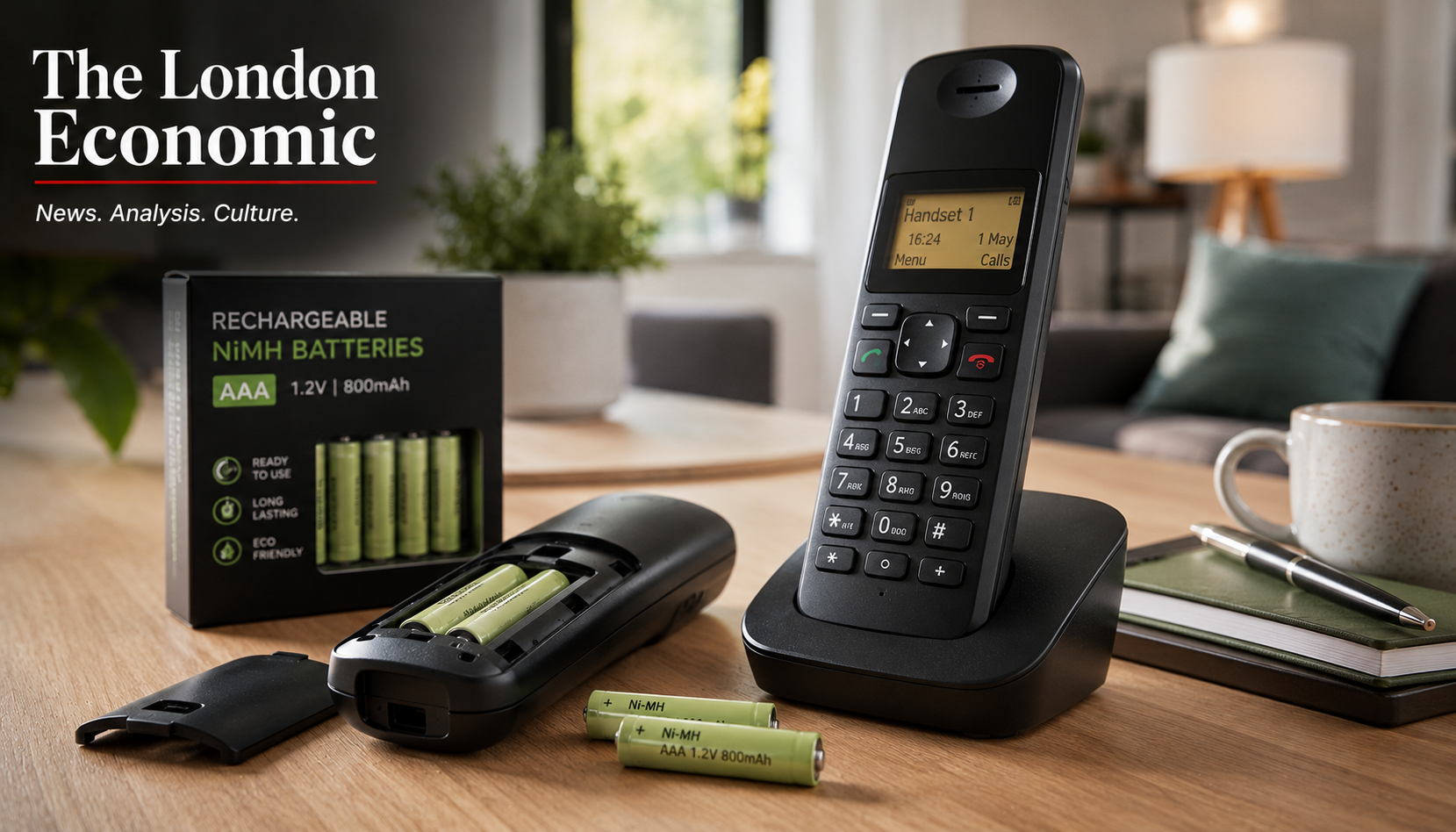
House Phone Batteries
If the battery in your cordless house phone no longer lasts through a single conversation, or the handset dies within minutes of leaving its charging cradle, you are not alone. It is one of the most common household technology problems reported in the UK, and in the vast majority of cases, the fix is straightforward and inexpensive.
House phone batteries degrade over time through repeated charge cycles, and most need replacing every two to three years. The good news is that replacing them is a task almost any adult can complete at home, without technical knowledge and without buying a new phone. This guide covers everything you need to know: the different battery types, how to find the right replacement, how to fit it properly, how to extend its lifespan, and how to dispose of old batteries responsibly.
Why House Phone Batteries Wear Out
Understanding why cordless phone batteries fail helps you recognise the signs early and avoid unnecessary frustration.
Rechargeable batteries do not last forever. Generally speaking, they can be recharged around 1,000 times before they stop holding a charge. With cordless phones, the batteries are constantly powering the handsets at a low level, which means they do not last as long as rechargeable batteries used in other devices like cameras.
Over time, battery performance reduces, usually after 12 months of heavy use, though two to three years is the typical lifespan under normal household conditions. When this happens, the phone’s talk time and standby time both shorten noticeably.
The clearest sign that replacement is needed is a handset that needs placing back on charge far more frequently than it used to, or one that dies mid-call despite showing an adequate charge level moments before. Many people mistake the batteries wearing down for the handset itself coming to the end of its lifespan. People therefore assume their phones are broken, not realising that the batteries can easily be replaced, often adding years to the lifespan of the handset.
The Three Types of House Phone Battery
Before buying a replacement, it helps to understand which type of battery your phone uses. There are three main chemistries found in cordless house phones.
Nickel Metal Hydride (NiMH)
NiMH batteries are the most common type found in modern cordless phones. They do not contain cadmium, making them more environmentally friendly than older alternatives. They typically handle 500 to 1,000 charge cycles, providing long-term durability. They are highly safe under household conditions, more stable under overcharging, short-circuiting, or high temperatures compared to lithium batteries, and significantly cheaper to produce.
It is crucial that replacement AAA batteries are rechargeable and have NiMH printed on them. Most AAA cordless phone batteries are 1.2V. Never use non-rechargeable 1.5V batteries as this is dangerous and could damage your phone.
Nickel Cadmium (NiCd)
NiCd batteries were found in earlier cordless phones and have largely been replaced by NiMH batteries, which do not contain cadmium and offer approximately double the capacity in the same physical size. If your phone is older and uses NiCd batteries, it is generally safe to replace them with NiMH batteries of the same voltage and a higher capacity, giving you better talk time than the original batteries provided.
If your cordless phone uses a NiCd battery, it is important to allow it to fully discharge before recharging in order to benefit from its full capacity.
Lithium Ion (Li-ion)
Lithium ion batteries are known for their high energy density, allowing them to be smaller and lighter than NiMH equivalents. However, they are more expensive, and their production and recycling processes are more complex. Lithium batteries are not as well-suited to the high current output required by cordless phones during calls, and their lifespan is typically shorter, averaging 300 to 500 charge cycles compared with 500 to 1,000 for NiMH.
Li-ion batteries are more commonly found in premium handset models. If your phone uses them, replace like for like as the phone’s charging circuit is calibrated to the battery chemistry it was designed for.
How to Find the Right Replacement Battery
This is where many people go wrong, and getting it right is essential both for performance and safety.
Step 1: Find Your Phone’s Model Number
You simply need to enter your make of cordless phone and model number into a battery finder tool, available from most specialist battery retailers. If you do not know your model number, it will usually be printed on the casing or base of the cordless phone.
Step 2: Check the Existing Battery
Open the battery compartment and look at the battery itself. The key information printed on it includes:
- Battery type: NiMH, NiCd, or Li-ion
- Voltage: Most are 1.2V for individual AAA cells, or 2.4V or 3.6V for battery packs
- Capacity: Expressed in milliamp-hours (mAh), for example 550mAh or 800mAh
When choosing a replacement, match the voltage and capacity of the original batteries. Replace your batteries with the same capacity. You will find this printed on the battery as a mAh rating such as 550mAh.
Step 3: Choose Genuine or Pattern Batteries
Genuine cordless phone batteries are like-for-like replacements from the original manufacturer, though they are not always available for every model. Pattern cordless phone batteries are made by a third party and are usually produced to match or surpass the quality of a genuine battery. Pattern batteries are often manufactured by specialist battery brands and can represent excellent value.
A critical safety note: it is a myth that the higher the capacity of the battery, the longer the phone will last. Extremely high capacity batteries usually need a higher charging current, often higher than the phone charger is set to, and therefore they may not charge properly. Resist the temptation to use higher capacity batteries than recommended.
Understanding Genuine vs Pattern Batteries: A Quick Comparison
| Feature | Genuine Battery | Pattern Battery |
|---|---|---|
| Source | Original manufacturer | Third-party specialist |
| Availability | Not always available for all models | Usually widely available |
| Price | Often higher | Often more affordable |
| Quality | Guaranteed match | Varies; reputable brands are reliable |
| Safety | Confirmed compatible | Check for CE certification |
How to Replace House Phone Batteries Safely
Replacing cordless phone batteries is a straightforward process, but following the correct steps matters both for performance and safety.
- Switch the handset off if possible, or simply remove it from the charging cradle before opening the battery compartment.
- Locate the battery cover. On most phones this is on the back of the handset. Some BT models require you to slide or pull off the entire rear panel.
- Remove the old batteries, noting the orientation of positive and negative terminals.
- Insert the new batteries in the same orientation.
- Replace the battery cover firmly.
- When you replace the batteries, place the phone on charge for the minimum period advised in the manual. New batteries will reach their full capacity after a few days of use. It is normal for new batteries to get warm during the charging process.
- It is quite normal to have to charge new batteries for 16 to 20 hours initially. You will find the recommended charging time in the phone handbook.
Using incorrect batteries or non-rechargeable batteries could damage your phone. It can cause overheating, a possible fire, or an explosion. Always replace with rechargeable batteries of the same type and rating.
How to Make House Phone Batteries Last Longer
Getting two to three years from a set of house phone batteries is achievable with the right habits. A few small changes can meaningfully extend the life of both current and future batteries.
Charge regularly: even if the cordless phone is not used often, charge it regularly to maintain the activity of the battery. Charge when the battery level falls below 20% rather than waiting for it to be completely flat. Avoid extreme temperatures: do not expose the battery to high or cold temperatures, such as direct sunlight or direct air conditioning. Replace timely: if the battery capacity decreases and affects your experience, replace it promptly rather than repeatedly running the handset on a failing cell.
To help your batteries last a little longer, allow them to run down completely about once a month, then recharge them to maximum capacity. This is particularly relevant for NiMH batteries.
New batteries and batteries that have not been used for a long period of time should be conditioned three to four times before they achieve maximum capacity.
One often overlooked factor is the quality of the replacement battery itself. Cheap batteries with inflated mAh claims that do not reflect actual capacity are widely available and often disappoint. Sticking to established brands or reputable specialist battery retailers in the UK reduces the risk of a poor experience.
Battery Packs vs Individual Batteries
Some cordless phones use individual AAA rechargeable batteries, while others use a sealed battery pack with a connector plug.
In almost all cases, cordless phones use AAA batteries. However, there are a handful of handsets that take AA batteries, so it is worth checking your model before ordering.
Battery packs are more common in older or mid-range models and tend to be model-specific, making it essential to search by your exact phone model number when ordering. Individual AAA NiMH batteries are more widely available and easier to source from supermarkets, electrical retailers, and specialist online battery shops across the UK.
In many cases, the replacement battery supplied by specialist retailers will be of a higher capacity than the original. This is not a problem and simply means you will enjoy longer talk and standby times due to the higher capacity offered by the newer battery, provided the voltage matches and the charger’s output is appropriate.
How to Dispose of Old House Phone Batteries Responsibly
This step matters and is often overlooked.
It is important not to throw old batteries in the bin. Lithium ion batteries and all batteries contain chemicals which are harmful to the environment. When these go to landfill, those chemicals eventually leak out into the surrounding soil. Many local councils will not take rubbish bags if they have batteries in them.
Old, worn out batteries should be recycled. All major supermarkets and high street shops now have battery recycling bins. Simply drop your old batteries into the bin.
Electrical retailers including Currys and Argos also accept old batteries for recycling. The Recycle Now website, run by the UK government-backed recycling campaign, provides a postcode-based locator for the nearest battery recycling point if you cannot find one locally.
The Most Common Cordless Phone Brands and Their Battery Types
| Brand | Common Battery Type | Typical Size | Notes |
|---|---|---|---|
| BT | NiMH | AAA 1.2V | Some models use battery packs |
| Panasonic | NiMH | AAA 1.2V | Generally easy to replace |
| Gigaset | NiMH | AAA 1.2V | Two-year warranty often coincides with battery failure |
| Binatone | NiMH | AAA 1.2V | Pattern batteries widely available |
| Philips | NiMH | AAA 1.2V | Check model number carefully |
Many phones, especially Gigaset models, come with a two-year warranty. That just so happens to be around the time where rechargeable batteries will start to die if they are used heavily. People therefore assume that the phones themselves are broken, not realising that the batteries can easily be replaced.
Key Takeaways
- House phone batteries in cordless handsets typically need replacing every two to three years under normal household use, after approximately 500 to 1,000 charge cycles.
- The most common battery type in modern UK cordless phones is NiMH, rated at 1.2V and available in AAA size for most handsets.
- Always match the voltage and battery chemistry of the original when replacing. Never use non-rechargeable 1.5V alkaline batteries in a cordless phone.
- It is a myth that higher mAh capacity always means better performance. Batteries with capacity significantly exceeding the charger’s output may not charge correctly.
- New batteries require an initial charge of 16 to 20 hours and may take a few days of use to reach full capacity.
- Dispose of old batteries at a recycling point in a supermarket, electrical retailer, or local collection point. Never put them in general household waste.
- Replacing batteries rather than buying a new handset is almost always the right choice economically, extending the life of an otherwise functional phone by several years.
Frequently Asked Questions
How long do house phone batteries last?
Under normal household use, cordless phone batteries typically last two to three years before they need replacing. Heavily used phones may need new batteries after 12 to 18 months. The clearest sign of failure is a handset that can no longer hold a charge through a single call.
What type of batteries do cordless house phones use?
Most modern cordless house phones use NiMH rechargeable batteries, usually AAA size at 1.2V. Some older models used NiCd batteries. A small number of premium models use lithium ion batteries. Always check the battery itself or the phone manual to confirm the correct type before buying replacements.
Can I use ordinary AAA batteries in my cordless phone?
No. Standard non-rechargeable alkaline batteries are rated at 1.5V and must never be used in a cordless phone. The phone’s charger continuously trickle charges the battery while in the cradle. Using non-rechargeable batteries creates an overheating risk and could damage or destroy the handset.
How do I find the right replacement battery for my phone?
Check the model number printed on the casing or base of the phone and use the battery finder tool offered by specialist UK battery retailers. Alternatively, open the battery compartment and note the chemistry, voltage, and mAh rating printed on the existing battery, then match these specifications in your replacement.
Can I replace the battery myself or do I need a technician?
In almost all cases, battery replacement is a simple DIY task requiring no tools and no technical knowledge. Open the battery compartment, swap the batteries, replace the cover, and charge for the recommended time as per your phone’s manual.
Is it worth replacing the battery or should I buy a new phone?
Replacing the battery is almost always worth doing first. A set of replacement AAA NiMH batteries costs a few pounds from most retailers, while a replacement cordless phone system with multiple handsets costs considerably more. If the phone functions correctly in every other respect, replacing the battery is the sensible and more sustainable choice.
How should I dispose of old cordless phone batteries?
Old batteries must not go in general household waste. Take them to the recycling bin at your nearest supermarket, DIY store, or electrical retailer. Most major UK supermarkets and shops including Tesco, Sainsbury’s, Currys, and Argos have battery recycling facilities near their entrances.
Why does my new replacement battery not last as long as I expected?
New NiMH batteries need conditioning. For the first few cycles after fitting, charge them fully for the recommended 16 to 20 hours and allow them to run down before recharging. Full capacity is typically reached after three to four complete charge and discharge cycles.
Conclusion
House phone batteries are a small but important component that many households overlook until a problem develops. The good news is that the problem is almost always solvable with a simple, inexpensive replacement, and that extending the life of a perfectly functional cordless phone is both the economical and environmentally sensible choice.
The key principles are straightforward. Match your replacement battery to the original in chemistry, voltage, and approximate capacity. Use only rechargeable NiMH batteries unless your phone specifies otherwise. Charge new batteries fully before first extended use. Never use standard alkaline batteries in a cordless phone. And always recycle old batteries through an approved collection point rather than general waste.
Done correctly, a battery replacement costing a few pounds can restore a cordless handset to full working order and give it several more years of reliable service. In a period when consumers are increasingly conscious of both household costs and unnecessary waste, that is a straightforward win on both counts.
About the Author