Honey and Co Warren Street
Honey and Co Warren Street is where one of the most important restaurant stories in modern London began. In a small, almost deliberately modest space close to Warren Street tube station, chefs Sarit Packer and Itamar Srulovich opened a tiny Middle Eastern restaurant in 2012 that would go on to reshape how Londoners thought about the food of Israel, the Levant, and the wider Eastern Mediterranean. It inspired cookbooks, columns, podcasts, and a generation of diners who had not previously understood how thrilling this cuisine could be when cooked with genuine craft and love.
If you are searching for Honey and Co on Warren Street, there is an important piece of information to know upfront: after ten years on Warren Street in London, Honey and Co announced it would be closing its original location in April 2022. The chef couple were not offered the option to renew their ten-year lease at 25A Warren Street, as the building was sold. The restaurant has since moved to a new and larger home in Bloomsbury. This guide tells the full story of the Warren Street original, the people behind it, what made it so significant, and where to find Honey and Co today.
What Was Honey and Co Warren Street?
Chefs Sarit Packer and Itamar Srulovich opened their first restaurant, Honey and Co, a tiny neighbourhood restaurant serving traditional Middle Eastern food, on Warren Street, London in 2012.
Sarit Packer and Itamar Srulovich inspired a huge wave of interest when they first opened in 2012 in a small café near Warren Street tube. The food was exceptional: delicious, multi-flavoured and colourful dishes with fresh ingredients, in awesome combinations, from a menu well-balanced between familiar options such as houmous and falafel and more adventurous items.
The Warren Street restaurant was not large. That was part of what made it special. In a city where restaurant openings are frequently defined by scale and ambition of design, Honey and Co arrived as something genuinely different: a neighbourhood café that happened to serve some of the best food in London. Tables were close together, the room was warm and unpretentious, and the food did all the talking it needed to.
Who Are Sarit Packer and Itamar Srulovich?
Understanding the restaurant begins with understanding the two people who created it.
In 2007, Sarit joined Ottolenghi, heading up the pastry teams for Islington, Kensington, Notting Hill and Belgravia before project managing the opening of NOPI, where she remained as Executive Chef before leaving to open Honey and Co in 2012.
Born in Jerusalem, Itamar’s earliest memories are of time spent around his grandmother’s kitchen table with his family, feasting on home-cooked Egyptian and Yemeni cuisine. Itamar moved to Tel Aviv in 1999 and joined Orna and Ella, an Israeli bistro, working his way up from kitchen porter to chef. He later moved to Joya, an Italian restaurant in Herzliya, where he met his wife-to-be Sarit Packer.
Two years later, Sarit and Itamar moved to London and joined the kitchens at the OXO Tower.
Their Ottolenghi background matters. Yotam Ottolenghi had already done significant work in bringing Middle Eastern ingredients and cooking techniques into the mainstream London food conversation. Packer and Srulovich’s time within that operation gave them deep technical grounding and an understanding of what London diners were ready for. When they opened Honey and Co, they brought all of that experience to bear on a cooking style that was personal, instinctive, and rooted in genuine memory rather than culinary trend.
Why the Warren Street Restaurant Became a Cult Destination
The word cult is used loosely about restaurants, but in Honey and Co’s case it was genuinely earned.
The food won the restaurant TV appearances and recipe-book deals. The brilliant range of eastern Mediterranean dishes was fresh and delightful and acclaimed by many as their best meal of the year, an impressive achievement for a relatively humble operation.
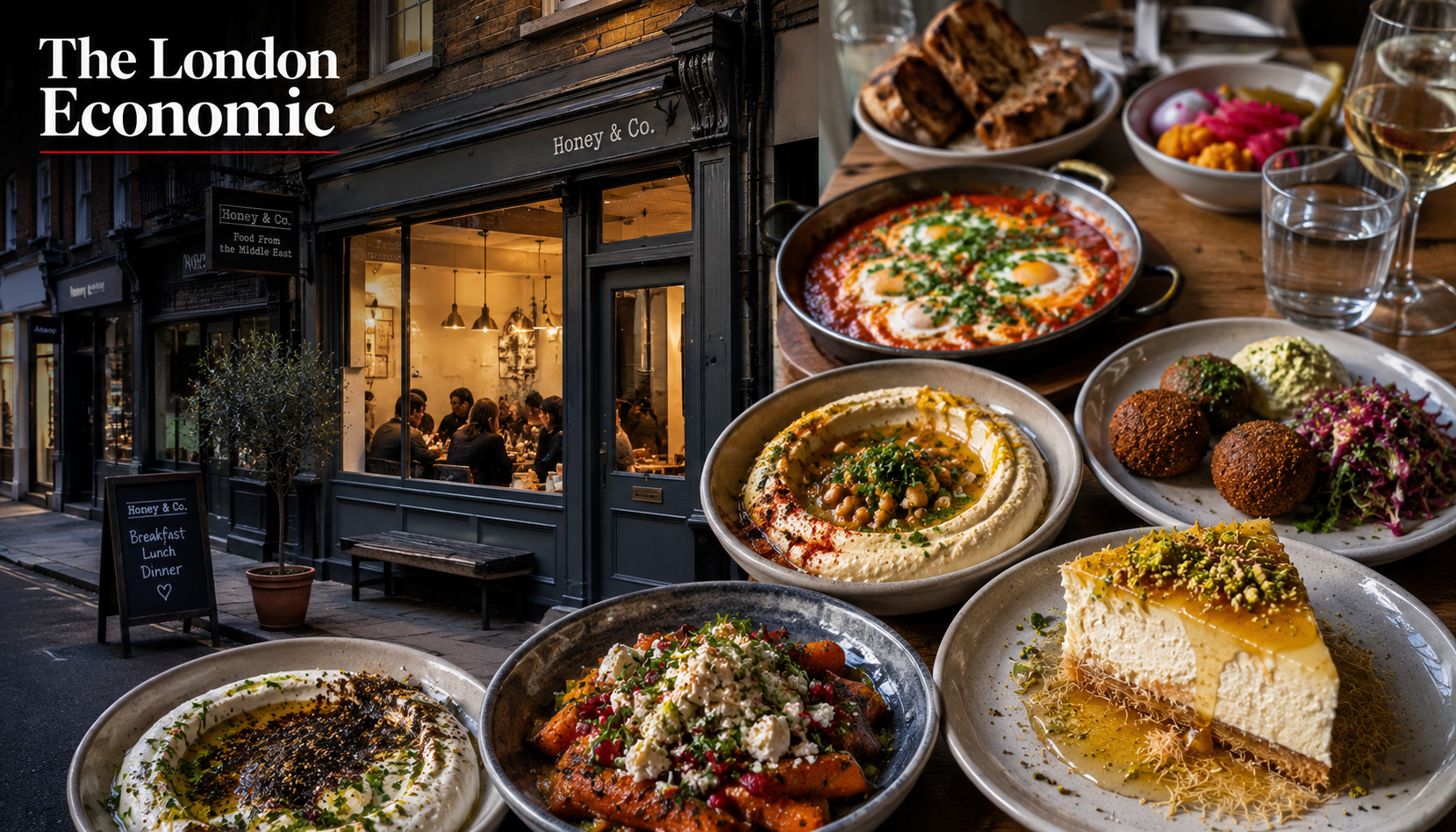
The menu combined the familiar and the unexpected in a way that rewarded both first-time visitors and regulars who returned constantly. The USP was that although many of the dishes were familiar, such as hummus, labneh, falafel, and so on, the flavours were extraordinary. Portions were generous, vegetarians were well catered for, and the carrot and blood orange salad was a must. And guests were firmly advised to leave room for the cheesecake. Magazinez Hub
That cheesecake deserves its own paragraph. Sarit’s honey and feta cheesecake on kadaif became one of the most talked-about desserts in London during the restaurant’s decade on Warren Street. It combined Middle Eastern ingredients with pastry technique in a way that was both surprising and deeply satisfying, and it became the dish most associated with the restaurant’s identity.
Restaurant Honey and Co was a hit with Londoners since it first opened in 2012, where it built a steady following amongst lovers of Middle Eastern food. Menu highlights included shakshuka and sabich at breakfast, Yemeni falafel and aubergine shawarma at lunch and dinner, and a knock-out dessert menu centring around the signature dish: Sarit’s honey and feta cheesecake on kadaif.
The Closing of the Warren Street Restaurant
In February 2022, the news broke that the original Honey and Co would close.
Itamar Srulovich said at the time: “Sadly the time came to renew and the building was sold instead. While it was a bit of a blow after such a crazy eighteen months, we are moving on and excited for the next ten years of Honey and Co, whatever that may bring. We had no clue what a happy monster it would become when we opened. Now we’re about so much more than bricks and mortar: who knew we would write cookbooks and a column, host a podcast, teach classes, spend a lot of time dancing on Instagram? And we know our community will support us on our next adventure, coming soon.”
The closing prompted an outpouring of affection from the restaurant’s devoted following. Honey and Co had been more than a successful restaurant. It had been a community, a reference point, and for many regular diners a place that felt genuinely personal rather than transactional.
The Warren Street spot closed down after ten years following the landlord’s refusal to extend its lease. The decision was not made by Packer and Srulovich: it was imposed on them by a property market reality that has affected independent restaurants across London with increasing frequency in recent years.
Honey and Co Today: Where It Has Moved
The good news for anyone who loved the Warren Street original is that the food, the philosophy, and the people behind it are all very much still present in London.
Honey and Co built up an intensely loyal clientele from the moment they opened their original restaurant on Warren Street. They have since moved to Bloomsbury, taking over the corner site on Lamb’s Conduit Street that used to be Cigala.
The new site on Lamb’s Conduit Street is approximately three times bigger than the original Honey and Co, but front of house is divided into four smaller spaces so the sense of intimacy the brand is known for is retained. There are fifty covers inside and twelve outside, with far more space back of house.
Sarit Packer described the move this way: “After ten years on Warren Street, we’ve moved Honey and Co to Lamb’s Conduit Street. This restaurant feels like the perfect continuation of everything we built on Warren Street. The same welcoming feel, the same delicious, generous Middle Eastern food that people have always come to us for. Now, we can just do all of that from a bigger kitchen, in a bigger space, for more people.”
The current address is 54 Lamb’s Conduit Street, London WC1N 3LW, opposite Noble Rot, which also oversees the wine list.
The Honey and Co Family of Restaurants
The Warren Street original was the starting point for what has become a significant and growing group of London restaurants and food businesses.
Since opening the first restaurant in 2012, the ever-evolving family now includes bakery-café Honey and Co Daily, Honey and Co Studio which operates as part deli and part gallery and creative event space, and the newly launched Honey and Co Great Portland, a deli by day and a wine bar by night.
Honey and Smoke, the original offshoot, continues on its merry way in Fitzrovia. As the name suggests, this addition brings a fiery, smoky grill to proceedings, operating in a big, buzzy, canteen-style space complete with tiled floors, plain square tables and plastic chairs. It opens its seasonal account with a colourful, inviting mix of Middle Eastern meze for sharing, pickles, creamy houmous, baba ganoush with crackers, salt-baked beetroot with yoghurt, radicchio and dukkah, all supported by Moroccan sourdough for dipping and scooping. The grill delivers bigger plates of meat, fish and vegetables fired over coals.
Beyond the restaurants, Packer and Srulovich have published five cookbooks: Honey and Co Food From The Middle East, which won Sunday Times Food Book of the Year, Honey and Co The Baking Book, Honey and Co At Home, Chasing Smoke: Cooking Over Fire Around the Levant, and their fifth book, Honey and Co Daily, which came out in May 2026. They also host a podcast called Honey and Co: the Food Sessions, and write regularly for FT Weekend Magazine, Guardian Feast and other publications.
What Made the Warren Street Original So Different
It is worth being specific about why the Warren Street restaurant is remembered with such particular affection, even compared with the excellent food that continues to come out of the Bloomsbury site.
While the Bloomsbury newcomer is a good addition to WC1, it is now a proper and comparatively large restaurant compared to its former location and has, for some, lost its special ambience. Some regulars feel it is not a patch on the original.
This is not a criticism of the current restaurant, which by any objective standard serves outstanding food. It reflects the irreplaceable quality of the original: a small space, built from scratch by two people with no investors and no safety net, that became something much larger than its dimensions suggested. Small restaurants with cult followings frequently suffer when they move to bigger premises, not because the food changes but because the magic of the space was partly a product of its constraints.
It has lost its special ambience but the food remains very good indeed. The falafel starter is magic. Slow-cooked lamb is smooth, tender and tasty. The stuffed aubergines are a flavour and texture sensation. And the cheesecake remains the dish to end on.
The Legacy of Honey and Co Warren Street
The significance of what Honey and Co achieved at Warren Street between 2012 and 2022 goes beyond the food itself.
There is more curiosity about Middle Eastern cuisine now but there is also more understanding, compared with when Honey and Co first opened. The restaurant played a meaningful role in that shift.
Honey and Co Warren Street helped make modern Israeli and Levantine cooking a genuine part of the London restaurant mainstream, not as an exotic novelty but as a legitimate and celebrated cuisine with its own techniques, ingredients, and depth. That contribution sits alongside the work of Ottolenghi and a handful of other pioneers, and it was achieved from a tiny room close to a tube station, through sheer quality and personality rather than marketing or investment.
Key Takeaways
- Honey and Co was opened on Warren Street, London, in 2012 by chefs and husband and wife team Sarit Packer and Itamar Srulovich, both with Ottolenghi backgrounds.
- The original restaurant was a small, neighbourhood café serving modern Middle Eastern food that built an intensely loyal following over ten years.
- The original Warren Street restaurant closed in April 2022 after the building was sold and the lease was not renewed, a decision imposed on the owners rather than one they made voluntarily.
- The restaurant relocated to 54 Lamb’s Conduit Street, Bloomsbury, in June 2022, taking over the former Cigala site opposite Noble Rot.
- The Bloomsbury site is approximately three times larger than the original but is divided into four smaller spaces to retain the sense of intimacy the brand is known for.
- The Honey and Co group now includes the main Bloomsbury restaurant, Honey and Co Daily bakery-café, Honey and Smoke grill in Fitzrovia, Honey and Co Studio, and Honey and Co Great Portland.
- Packer and Srulovich have published five cookbooks, the most recent of which, Honey and Co Daily, appeared in May 2026, and host a popular podcast alongside their restaurant work.
- The Warren Street original is remembered by regulars as having a particular magic that was partly a product of its modest scale and the sense that it was genuinely personal.
Frequently Asked Questions
Is Honey and Co still on Warren Street?
No. The original Honey and Co restaurant at 25A Warren Street closed in April 2022 after ten years, when the building was sold and the lease was not renewed. The restaurant relocated to 54 Lamb’s Conduit Street, Bloomsbury, in June 2022, which is its current main location.
Where is Honey and Co now?
The main Honey and Co restaurant is currently at 54 Lamb’s Conduit Street, London WC1N 3LW, in Bloomsbury, opposite Noble Rot. The group also operates Honey and Co Daily, Honey and Smoke on Great Portland Street in Fitzrovia, Honey and Co Studio, and Honey and Co Great Portland.
Who founded Honey and Co?
Honey and Co was founded by Sarit Packer and Itamar Srulovich, a married couple originally from Israel who both worked at Ottolenghi before opening their own restaurant. Sarit was Executive Chef at NOPI before leaving to open Honey and Co in 2012.
What is Honey and Co famous for?
Honey and Co is known for modern Middle Eastern cooking, particularly dishes drawing on Israeli, Levantine, Egyptian, and Yemeni traditions. The restaurant is especially associated with Sarit’s honey and feta cheesecake on kadaif, which became one of the most talked-about desserts in London during the Warren Street years.
Why did the Warren Street restaurant close?
The building that housed the original restaurant at 25A Warren Street was sold, and the landlord did not offer Packer and Srulovich the option to renew their ten-year lease. The closure was not a commercial decision but a property market reality that forced a move they had not planned.
What are the opening hours for Honey and Co Bloomsbury?
The current Honey and Co on Lamb’s Conduit Street is open Tuesday to Friday from 8am to 10.30pm, Saturday from 9am to 10.30pm, and is closed on Sundays and Mondays. Hours are subject to change and should be confirmed directly with the restaurant.
Does Honey and Co have a cookbook?
Yes. Packer and Srulovich have published five cookbooks: Honey and Co Food From The Middle East, which won Sunday Times Food Book of the Year, Honey and Co The Baking Book, Honey and Co At Home, Chasing Smoke: Cooking Over Fire Around the Levant, and Honey and Co Daily, which was published in May 2026.
Is Honey and Co vegetarian-friendly?
Yes. The menu offers substantial vegetarian options and is noted for catering thoughtfully to non-meat eaters. Middle Eastern cuisine naturally accommodates a wide range of vegetable-based dishes, and at Honey and Co these are treated with the same care and generosity as the meat and fish offerings.
Conclusion
Honey and Co Warren Street was not just a restaurant. It was a place where London’s relationship with Middle Eastern food changed, where two chefs with a clear sense of purpose and a deep attachment to their culinary heritage built something that far exceeded the expectations its modest dimensions might have suggested.
The closing of the Warren Street original in 2022 was a genuine loss, felt clearly by the community of diners who had gathered around it over a decade. What followed on Lamb’s Conduit Street in Bloomsbury is a worthy continuation: bigger, more comfortable, and serving food that remains among the best of its kind in the capital.
For readers discovering Honey and Co for the first time, the Bloomsbury location is the place to visit. For those who remember Warren Street, the food will feel instantly familiar even if the room has changed. And for anyone who wants to understand what made the original so significant, the legacy is visible across the entire London food landscape it helped to shape.
About the Author