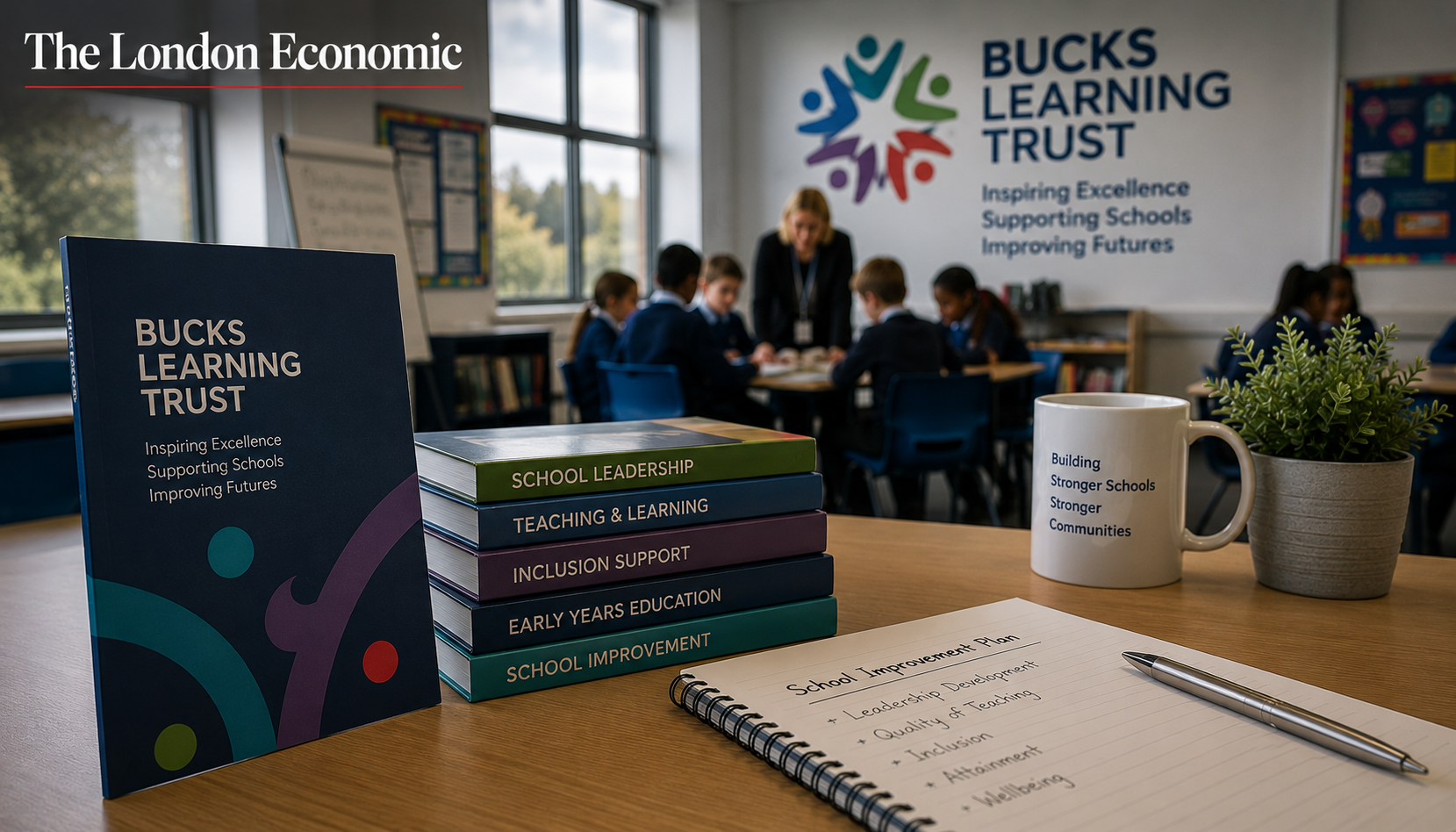
Bucks Learning Trust
Bucks Learning Trust is a name that regularly appears in searches related to Buckinghamshire schools, education support, and school improvement in England. Understanding it properly requires addressing the most important fact upfront: Bucks Learning Trust ceased trading in 2019 and entered liquidation. The closure marked the end of a significant chapter in Buckinghamshire’s education support landscape.
This guide covers what Bucks Learning Trust was, what it did, who it served, why it closed, and what its story tells us about the challenges facing school improvement organisations in England in the years following its establishment.
What Was Bucks Learning Trust?
Bucks Learning Trust, formally known as Buckinghamshire Learning Trust, was an education-focused charity and public-sector mutual created to support schools, early years providers, and educators through improvement services and professional development.
It was registered as a charity with the Charity Commission for England and Wales under charity number 1151135, and as a company at Companies House under number 08353197. Both registrations confirm it as a formal, regulated entity operating within England’s charity and company law frameworks.
Buckinghamshire Learning Trust was established in order to provide high quality services to schools and settings primarily in Buckinghamshire, but also beyond the county boundaries.
The charitable objective as stated in its official registration was clear: improve educational provision for children and young people in Buckinghamshire by providing a range of support services to schools and settings that wanted to raise their standards and quality of provision.
Bucks Learning Trust was established in the early 2010s as part of wider education reforms in England, aiming to move school support services outside direct local authority control.
Why Was Bucks Learning Trust Created?
Understanding why the trust was established in the first place requires some context about where English education was in the early 2010s.
The period from 2010 onwards saw a significant acceleration in the academisation of English schools. Academies are state-funded schools operating outside local authority control, governed directly by academy trusts. As more schools became academies, the traditional model of local authority-led school improvement, where councils employed advisers and support staff to work with schools, came under increasing pressure. Academies were no longer obliged to purchase services from their local council, and budgets that had previously funded school improvement infrastructure began to shift.
Local authorities were rethinking how support services for schools should be delivered, and new models were emerging to balance public accountability with operational flexibility. Against this backdrop, Bucks Learning Trust was established as an education-focused charity and social enterprise with a clear goal: to improve educational outcomes by supporting schools, teachers, leaders, and early-years providers across Buckinghamshire and beyond.
The public-sector mutual model that Bucks Learning Trust represented was actively promoted by government policy at the time as a way of delivering public services more flexibly. Staff and management from the local authority’s education support function would effectively spin out into an independent organisation, taking their expertise and knowledge with them while operating on a more commercially sustainable basis than a direct council department could achieve.
As well as supporting schools and early years settings directly, the Trust was working with Buckinghamshire County Council to fulfil its statutory duties for raising attainment and securing the best possible future for children and young people in the county.
What Services Did Bucks Learning Trust Offer?
The Trust offered school improvement support, leadership and governance advice, early years services, inclusion support, and professional development training for teachers and school leaders.
In practice, this covered a wide range of activities that schools in Buckinghamshire could commission:
School improvement and inspection readiness support was among the core offerings. Schools facing challenging Ofsted ratings or wanting to prepare for future inspections could draw on the trust’s advisers for reviews, gap analysis, and action planning guidance.
Leadership development and coaching supported headteachers and aspiring leaders across the county. The trust’s advisers brought experience of school leadership at senior levels and could work with individual leaders or whole leadership teams.
Governance advice helped school governing bodies, whose role became increasingly significant under the academy and free school model, understand their responsibilities and carry them out effectively.
Early years services addressed the provision for children from birth to five, covering nurseries, childminders, and reception-age children in maintained settings.
Inclusion support helped schools meet the needs of pupils with special educational needs and disabilities, a demanding area of school life that requires specialist expertise.
Professional development training for teachers represented an ongoing revenue stream, as schools needed to invest in continuing professional development for their staff under Ofsted’s expectations and their own quality assurance processes.
Buckinghamshire Learning Trust aimed to increase the number of schools and settings giving good and better provision to children and young people and to reduce the number of schools and settings falling into Ofsted categories.
Who Did Bucks Learning Trust Serve?
The primary client base for Bucks Learning Trust was schools and settings across Buckinghamshire, a county in south-east England covering a large geographic area that includes both affluent commuter towns and more rural communities.
For many schools, the Trust acted as a trusted intermediary. It understood local contexts, regional challenges, and the specific needs of Buckinghamshire schools. This local knowledge differentiated it from national consultancy firms or academy-chain support structures.
This local dimension was genuinely significant. Buckinghamshire retains a selective secondary school system, with grammar schools serving pupils who pass the eleven-plus examination, alongside non-selective secondary schools. This creates an educational context quite different from most of England, where comprehensives are the norm. An organisation that understood that context and its implications for school culture, pupil demographics, and parental expectations was able to offer advice that national consultancy firms without that local grounding could not readily replicate.
Beyond schools, the trust served early years settings including nurseries, children’s centres, and pre-school providers. These settings face regulatory and quality requirements from Ofsted and benefit from specialist support in meeting those standards.
Why Did Bucks Learning Trust Close?
The closure in 2019 is the most important fact for any current reader to understand, and it deserves honest, balanced explanation.
Despite its strong mission and early success, Bucks Learning Trust faced significant financial and structural pressures over time. National policy changes reduced central funding for school improvement services, while increased autonomy for schools meant fewer guaranteed contracts. The Trust relied heavily on income from traded services.
This reliance on traded services was an inherent structural vulnerability. Unlike a local authority education department funded by council tax and government grants, the trust needed to sell its services to schools and settings that were increasingly constrained by their own budget pressures. Schools throughout the 2010s faced real-terms funding reductions, and discretionary spending on external school improvement support was among the first categories to be reduced when headteachers needed to find savings.
As budgets tightened and schools faced their own financial constraints, spending on external support became harder to justify. Competition from other providers, including academy trusts offering in-house support, further reduced demand. Balancing charitable aims with commercial realities proved increasingly difficult. Even with careful management, maintaining staff capacity, service quality, and financial stability became an ongoing challenge.
The growth of multi-academy trusts was particularly significant. As more Buckinghamshire schools joined larger academy groups, those groups provided their own school improvement support to member schools in-house. Schools within a multi-academy trust had no particular reason to commission external services from Bucks Learning Trust when their academy group’s central team was already providing equivalent support.
In 2019, Bucks Learning Trust ceased trading and entered liquidation.
The Charity Commission and Companies House records both confirm the organisation’s ceased trading status. This is a matter of public record that readers can verify directly through those official databases.
What the Closure Revealed About School Improvement Models
The story of Bucks Learning Trust is not simply the story of one organisation that did not survive. It reflects broader tensions in how England funds and delivers school improvement support.
While disappointing for staff and partner schools, the closure also highlighted broader systemic issues rather than isolated organisational failure.
The public-sector mutual model, of which Bucks Learning Trust was an example, was predicated on the assumption that schools would continue to purchase services from independent providers after those providers had spun out from local authority control. In practice, the atomisation of the school system, with individual academies, free schools, and multi-academy trusts all making their own procurement decisions, made it extremely difficult to maintain the volume of contracts needed to sustain organisations of this type.
At the same time, the reduced central funding for school improvement services that had previously been administered through local authorities and organisations like Bucks Learning Trust was not replaced by equivalent provision elsewhere in the system. Some schools that had previously relied on those services found themselves without comparable support.
The policy questions raised by these events remain live and contested in education circles. How should school improvement be funded? What is the appropriate role of local authorities in a system dominated by academies? How can specialist expertise in areas like special educational needs, early years provision, and school leadership development be maintained when the organisations that employed that expertise can no longer sustain themselves commercially?
Bucks Learning Trust and the Current Buckinghamshire Education Landscape
Since the closure of Bucks Learning Trust in 2019, the Buckinghamshire education landscape has continued to evolve. Several other organisations and structures now provide functions that Bucks Learning Trust previously offered.
Buckinghamshire Council, the unitary authority that replaced the former county council and district councils in 2020, retains statutory duties for school improvement and educational attainment. It commissions and provides some support services, though the scale and range of provision differs from what was available through Bucks Learning Trust at its peak.
Multi-academy trusts operating in Buckinghamshire provide in-house school improvement support to their member schools. The Great Learners Trust, an eleven-school primary academy group in the county, is one example. That organisation is entirely distinct from Bucks Learning Trust, which was a service provider and charity rather than an academy trust.
The Oxford Diocesan Bucks Schools Trust, known as ODBST, is a separate multi-faith academy trust serving Buckinghamshire and Milton Keynes with its own structure, governance, and educational mission. It has no connection to Bucks Learning Trust other than operating in an overlapping geographic area.
Schools in Buckinghamshire now access improvement support through a range of channels: their own academy trust’s central provision if they belong to one, commissioned services from Buckinghamshire Council, independent education consultancy firms, Teaching School Hubs, and the regional school improvement structures introduced by the Department for Education.
What Remains of Value in the Bucks Learning Trust Story
Looking back at what Bucks Learning Trust achieved before its closure, several aspects of its approach are worth understanding.
Its local focus was a genuine differentiator. The advisers who worked for the trust understood Buckinghamshire’s selective education system, its school communities, and the specific context of the county in ways that national providers could not replicate quickly. That local knowledge took years to accumulate and was lost when the organisation closed.
Its work with early years providers addressed a consistently underserved area of the education system. Early years quality has a disproportionate impact on children’s long-term outcomes, particularly for children from disadvantaged backgrounds, and specialist support for nurseries, childminders, and pre-school settings is valuable and scarce.
Its model of working with both schools and the local authority in a collaborative rather than adversarial relationship reflected a sensible approach to the complex ecology of Buckinghamshire’s education system. The attempt to bridge between council statutory duties and individual school autonomy was theoretically sound, even if the commercial model proved unsustainable.
Important Clarification: Confusion with Other Organisations
Given the number of searches for Bucks Learning Trust in 2026, it is important to be clear about what the organisation is not.
Bucks Learning Trust is not a currently operating organisation. It ceased trading in 2019.
It is not the Great Learners Trust, which is a separate multi-academy trust of primary schools in Buckinghamshire.
It is not the Oxford Diocesan Bucks Schools Trust, which is a separate multi-faith academy trust operating in Buckinghamshire and Milton Keynes.
It is not Buckinghamshire Council’s current school improvement service, which is delivered through council structures following the trust’s closure.
Some online content written in 2026 describes Bucks Learning Trust as if it were currently operational. This is inaccurate. The Charity Commission register and Companies House both confirm that the organisation is no longer active. Readers seeking current school improvement support in Buckinghamshire should contact Buckinghamshire Council’s education team or their school’s academy trust directly.
Key Takeaways
- Bucks Learning Trust, formally known as Buckinghamshire Learning Trust, was an education-focused charity and public-sector mutual established in the early 2010s to provide school improvement and professional development services to schools and early years settings in Buckinghamshire.
- It was registered as a charity with the Charity Commission under number 1151135 and as a company at Companies House under number 08353197.
- Its services included school improvement support, leadership and governance advice, early years services, inclusion support, and professional development training for teachers and school leaders.
- The trust worked in partnership with Buckinghamshire County Council to support its statutory duties for raising attainment while operating as an independent charitable entity.
- Bucks Learning Trust ceased trading in 2019 and entered liquidation, following financial pressures caused by reduced central funding for school improvement services, school budget constraints reducing demand for traded services, and competition from multi-academy trusts providing in-house support to member schools.
- The closure highlighted systemic issues about how England funds and delivers school improvement in an academised school system rather than isolated organisational failure.
- Bucks Learning Trust is not the same as the Great Learners Trust, the Oxford Diocesan Bucks Schools Trust, or Buckinghamshire Council’s current education support service.
- Schools in Buckinghamshire seeking current school improvement support should contact Buckinghamshire Council’s education team or their academy trust directly.
Frequently Asked Questions
What is Bucks Learning Trust?
Bucks Learning Trust, formally known as Buckinghamshire Learning Trust, was an education-focused charity and public-sector mutual that provided school improvement support, professional development, leadership advice, early years services, and inclusion support to schools and settings in Buckinghamshire. It was registered as a charity under number 1151135 and ceased trading in 2019.
Is Bucks Learning Trust still operating?
No. Bucks Learning Trust ceased trading in 2019 and entered liquidation. It is no longer operational. Schools seeking school improvement support in Buckinghamshire should contact Buckinghamshire Council’s education team or their academy trust’s central team.
Why did Bucks Learning Trust close?
The trust closed due to a combination of financial pressures: reduced central government funding for school improvement services, school budget constraints that reduced spending on external support, the growth of multi-academy trusts providing in-house support to their member schools, and the structural difficulty of sustaining a traded-services model in an increasingly fragmented school system.
Is Bucks Learning Trust the same as the Great Learners Trust?
No. These are entirely separate organisations. The Great Learners Trust is a multi-academy trust of eleven primary schools in Buckinghamshire. Bucks Learning Trust was a service provider and charity that supported schools across the county. Bucks Learning Trust ceased trading in 2019. The Great Learners Trust is a separate, independently operating academy trust.
What did Bucks Learning Trust do for schools?
It offered school improvement support and inspection preparation, leadership development and coaching for headteachers and aspiring leaders, governance advice for school governing bodies, early years services for nurseries and pre-school providers, inclusion support for pupils with special educational needs, and professional development training for teachers and school leaders.
Who funded Bucks Learning Trust?
The trust was primarily funded through income from traded services, meaning schools and settings paid for the services they received. It also worked in partnership with Buckinghamshire County Council to deliver some statutory functions. This reliance on traded income became a structural vulnerability as school budgets tightened.
Who should I contact for school improvement support in Buckinghamshire now?
Following the closure of Bucks Learning Trust, schools in Buckinghamshire can access improvement support through Buckinghamshire Council’s education team, their own academy trust’s central provision, Teaching School Hubs serving the area, independent education consultancy firms, and the Department for Education’s regional school improvement structures.
Was Bucks Learning Trust a multi-academy trust?
No. Bucks Learning Trust was a charitable service provider, not a multi-academy trust. It did not sponsor, govern, or run schools directly. It provided support services to schools that remained independently governed. This is one of the key distinctions between it and organisations like the Great Learners Trust or the Oxford Diocesan Bucks Schools Trust.
Conclusion
Bucks Learning Trust occupies an important but now historical place in Buckinghamshire’s education story. It was created in good faith and with genuine purpose at a moment when the English education system was restructuring itself in ways that required new thinking about how school improvement support would be delivered and funded.
The model it represented, a local, expert, relationship-based organisation bridging between council statutory duties and the autonomy of individual schools, had real strengths. The local knowledge it accumulated, the specialist expertise it maintained across school improvement, early years, inclusion and leadership development, and the collaborative working relationships it built with both schools and the local authority were genuine assets that took years to develop.
That those assets could not be sustained commercially reflects systemic challenges in how England has structured school improvement funding rather than a failure of the organisation’s mission or the quality of its people. The closure in 2019 left questions unanswered about where comparable expertise would come from, and those questions remain relevant for education policymakers thinking about the long-term health of school improvement infrastructure.
For parents, teachers, and school leaders in Buckinghamshire today, the practical reality is that Bucks Learning Trust is part of the county’s recent educational history rather than its present. Understanding what it was, what it tried to do, and why it closed helps make sense of the current landscape, and of the ongoing challenge of maintaining high-quality school improvement support across a diverse and geographically spread county.
About the Author