Pennsylvania Castle Portland
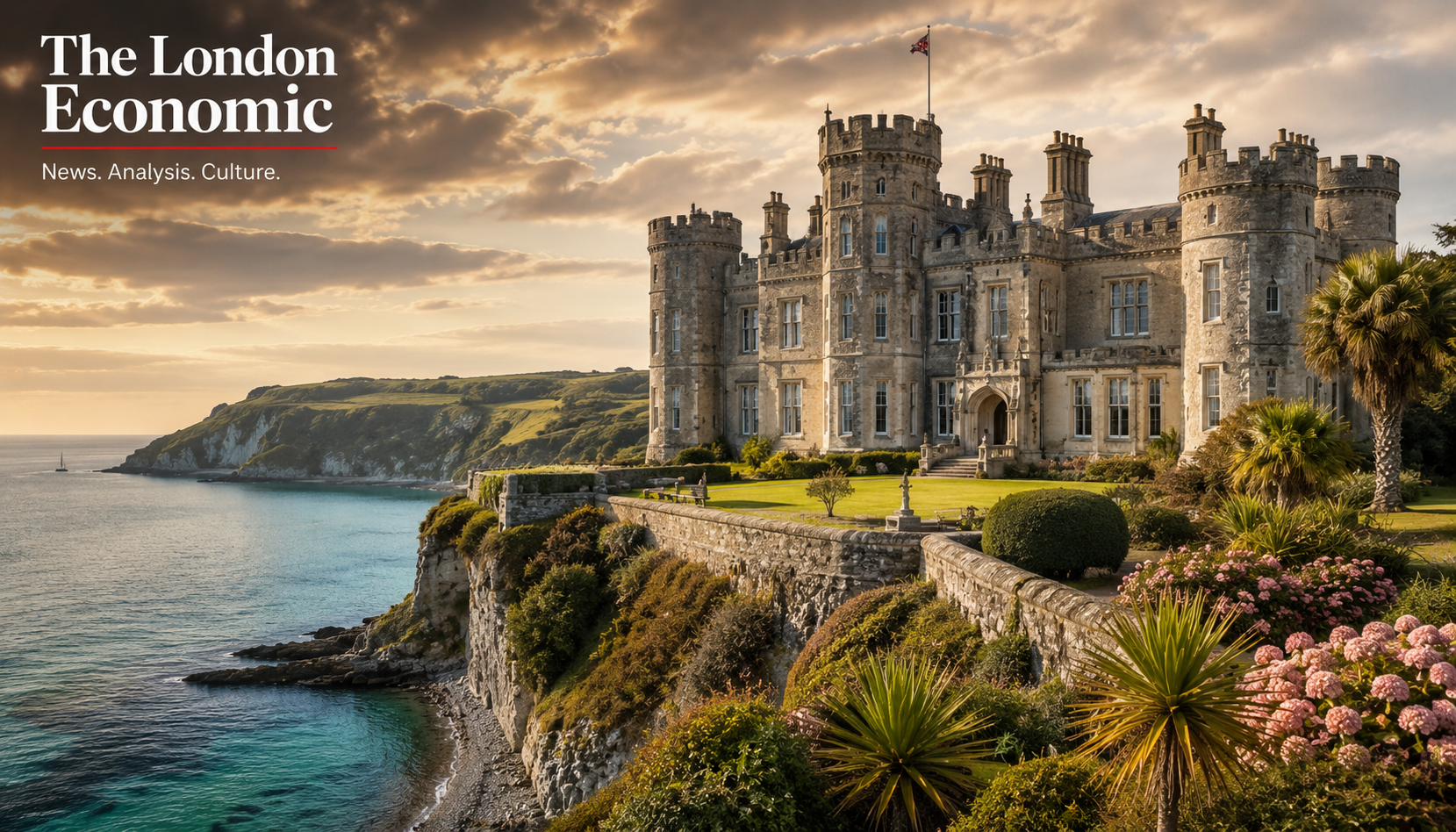
Pennsylvania Castle is one of the most historically significant and visually striking buildings on the south coast of England, yet it remains relatively little known outside Dorset and the circles of those who have stayed or celebrated there. Perched on the clifftops of the Isle of Portland, overlooking the sheltered waters of Church Ope Cove and the wider English Channel, it is a building that carries an extraordinary amount of history within its Portland stone walls.
From its royal origins in the late eighteenth century to a wartime role that contributed to the planning of the Normandy landings, and from its decades as a hotel to its current life as an exclusive-use luxury estate, Pennsylvania Castle Portland has a story that rewards close examination. This guide covers all of it.
What Is Pennsylvania Castle?
Pennsylvania Castle is a Gothic Revival mansion on the Isle of Portland, Dorset, England. It is located in Wakeham and overlooks Church Ope Cove. The castle is Grade II Listed, as is the adjacent gatehouse and lodges, which are now in separate ownership.
The castle, built of Portland stone, was originally a rectangular block until it was extended in the twentieth century. It also has projecting corner turrets, embattled parapets and a circular tower.
The result is a building that reads unmistakably as a castle from the outside, dramatic in silhouette against the Dorset sky, while offering interiors that balance historical character with considered comfort. The famous Portland stone used in its construction is the same material used to build St Paul’s Cathedral and Buckingham Palace in London, a detail that speaks to both the quality of the local quarrying tradition and the ambitions of the man who commissioned it.
Who Built Pennsylvania Castle and Why?
The castle was built in 1797 to 1800 to designs by the architect James Wyatt for John Penn, Governor of Portland and grandson of William Penn, the founder of Pennsylvania. Penn discovered the area on one of his trips with King George III, and subsequently chose it for a marine mansion.
John Penn, the son of William Penn and Juliana Fermor, one of Queen Charlotte’s Ladies in Waiting, often travelled with the Royal entourage. During one such tour, King George III and Mr Penn discovered the Isle of Portland. Being enchanted with the pristine beauty of Church Ope Cove, Penn decided to build his own mansion atop the natural platform provided by the cove. Penn approached the King, who owned most of the land, in order to buy it. The King agreed to sell, and Penn then approached James Wyatt who designed and helped construct the mansion.
James Wyatt was one of the foremost architects of his era, known for his Gothic Revival work and his commissions for the English aristocracy. His design for Pennsylvania Castle reflects the Romantic sensibility of the period, when the idea of the castle as a symbol of permanence, authority, and connection to the land carried genuine cultural weight.
The name itself tells the story of the family’s transatlantic identity. It was built in 1797 by John Penn, the grandson of William Penn who founded the US state of Pennsylvania. The choice to name his English retreat after the American state his family had created is a gesture of continuity across two continents.
Royal Connections and Early History
The castle’s royal connections were established from the very beginning.
The castle was opened in 1800 by the then-Princess Elizabeth, whose father, King George III, celebrated many happy wedding anniversaries as an esteemed guest.
Since its construction, this cliff-top mansion has been witness to a number of Royal weddings and events, most notably the King and Queen’s visit to the castle for their wedding anniversary soon after its completion.
John Penn also left his mark on the surrounding area in ways that did not always go smoothly. A few years after the castle’s completion, Penn had a bath built below the gardens of the castle, during a time when sea bathing was popular. However, when it was completed, Portland’s Court Leet demanded rent for its use as it was built on common land. Penn refused to pay and the bath was abandoned.
This minor dispute with local authorities is a revealing footnote. Even a man with royal connections and the resources to build a cliff-top mansion in imported Gothic Revival stone was not exempt from the practical realities of the Isle of Portland’s communal land governance.
Pennsylvania Castle and the D-Day Landings
Of all the historical chapters in this building’s story, none carries greater weight than its role in the Second World War.
During the Second World War, Winston Churchill, General Eisenhower and General de Gaulle visited the castle, where they met to finalise their plans for the Normandy landings.
It has been claimed that the D-Day invasion plans were hatched at this castle. Winston Churchill, General de Gaulle and General Eisenhower met within its grand walls on the cliff-top to discuss the strategies and tactics to win the war. After the victory of the allied forces in the Second World War, the involvement of Portland and Pennsylvania Castle with the planning of the D-Day invasions were recognised with a grand ceremony on 22 August 1945.
The Drawing Room showcases an octagonal table which played a historic part in the final preparations for the D-Day landings.
The Isle of Portland’s position as Dorset’s most southerly point gave it obvious strategic significance throughout the war. The Royal Navy maintained a significant presence at Portland Harbour, and the area’s geographic relationship with the French coast made it a logical location for planning the largest seaborne invasion in military history.
Thomas Hardy’s Literary Connection
The castle’s historical significance extends into literature as well as military history.
The castle later appeared as Sylvania Castle in Hardy’s 1892 novel The Well-Beloved.
The Penn is a neo-Gothic estate so epic, it inspired one of the great literary love stories.
Thomas Hardy, who was born in Dorset and whose fiction is inseparable from the county’s landscape, clearly found the castle’s atmosphere and setting compelling enough to fictionalise it. The Well-Beloved, one of his later novels, uses the Isle of Portland as its setting and draws on the particular quality of the place: its isolation, its dramatic geology, its relationship with the sea, and its sense of existing slightly outside ordinary time.
From Private Residence to Hotel and Back
The castle’s twentieth-century history is one of transformation between uses.
After becoming a hotel in 1950, the castle reverted to being a private residence in the 1990s. It is now hired out for functions and events, and is Portland’s most expensive residential property.
During its years as Pennsylvania Castle Hotel, it served guests exploring the Jurassic Coast and the wider Dorset countryside. The hotel period ended in the 1990s, after which the building returned to private residential use.
Prior to its current use, it had been a family home and a hotel. Debbie Harry of Blondie even owned it at one point. ROOFLIO
The castle was sold in 2011 for four million pounds to a buyer from Australia, and has since been developed into its current form as a luxury exclusive-use estate by Colonial Leisure Ltd.
Pennsylvania Castle Today: What to Expect
Pennsylvania Castle is an exclusive nine-bedroom rental property steeped in history. The picturesque castle is perched on a cliff top overlooking Church Ope Cove, with breathtaking views of the sea. Whether it is a family gathering, a getaway with friends or a milestone event, the Penn provides the perfect setting for groups wanting to escape the hustle and bustle of everyday life to relax and unwind, or those looking to celebrate a special occasion in style.
Accommodation and Facilities
Pennsylvania Castle has nine bedrooms, nine bathrooms, and sleeps up to twenty guests, with one-person-per-bed occupancy for fourteen. It is available for exclusive use only. Facilities include an indoor pool, beautiful grounds, a library, and a Peloton Shed with Peloton bike, weights and a yoga deck. Catering can be self-catered or provided by a preferred supplier. Guests may bring their own drinks with no charge. Music and bar licence runs until 11pm, with drinks available around the clock for residents.
The extensive landscaped gardens and grounds include large lawns, one with a wedding pergola, terraces with outdoor dining facilities and sunbeds, English, Italian, Tropical and Japanese gardens, and direct access to a sheltered beach just a few minutes’ walk from the castle. There are views from most parts of the terraces and gardens, and ponds, fountains and waterfalls are featured throughout. The lawn beyond the Italian garden can be used as a helipad if required.
The Interior
From the moment you walk through the doors, it is clear the Penn places an emphasis on elegance. Every room has its own charm and character and effortlessly blends both comfort and luxury. The balance of modern and classic styles suits such a historic building which has been lovingly refurbished.
Penn Castle has an extensive wine list and guests are able to choose what they would like beforehand and will find their bottles chilling in the fridge upon arrival. Alternatively, guests are able to bring their own alcohol.
Pennsylvania Castle as a Wedding Venue
The estate has developed a strong reputation as one of the most distinctive wedding venues on the south coast of England.
The estate has a capacity for 150 guests and accommodation available for 40. The address is Pennsylvania Castle Estate, Pennsylvania Road, Portland, Dorset, DT5 1HZ.
The estate consults with Dorset County Council to develop a bespoke ecology strategy that protects trees and flora wherever possible. The recent Clifftops development saw this strategy in action, with clifftop flora recreated above five cliffside residences to attract local butterflies.
For couples seeking a venue with genuine historical depth, dramatic coastal scenery, and the privacy of exclusive use, Pennsylvania Castle offers a combination that very few venues in England can match.
The Isle of Portland: Context and Setting
Understanding Pennsylvania Castle fully requires some understanding of where it sits.
The Isle of Portland is known as an explorer’s island for good reason. As Dorset’s most southern point, it boasts some of the most stunning landscapes along the Jurassic Coast. With Chesil Beach just a short distance away, there is no better place to stay than the luxurious Pennsylvania Castle.
Just a short distance from Pennsylvania Castle Estate lies Portland Bill, the southernmost point of Dorset. Known for its iconic red and white lighthouse, first established in 1716, Portland Bill offers a lovely walk with panoramic views of the coastline.
Portland is a small island at only 4.5 miles long and 1.75 miles wide. It is easily accessible by both road and train, followed by a short taxi ride. For the adventurous there is windsurfing and paddleboarding off Chesil Beach, as well as coastal walks. Portland Bill and Pulpit Rock are just a few miles away and simply have to be seen.
The Jurassic Coast, of which Portland forms the western anchor, is a UNESCO World Heritage Site recognised for its geological significance. The 185-million-year fossil record exposed along its cliffs represents one of the most complete in the world, and the landscape surrounding Pennsylvania Castle reflects that deep geological time in the quality of its light, its stone, and its relationship with the sea.
A Quick Comparison: Pennsylvania Castle vs Other Dorset Exclusive-Use Properties
| Feature | Pennsylvania Castle | Typical Dorset Country House | Coastal Cottage Rental |
|---|---|---|---|
| Historic designation | Grade II Listed | Varies | Rarely listed |
| Bedrooms | 9 | 6 to 12 | 2 to 5 |
| Sea views | Yes, cliff-top | Rarely | Occasional |
| Wedding licence | Yes, up to 150 | Often | Rarely |
| D-Day history | Yes | No | No |
| Exclusive use | Yes | Often | Yes |
| Helipad | Yes | Rarely | No |
| Indoor pool | Yes (seasonal) | Sometimes | Rarely |
Key Takeaways
- Pennsylvania Castle is a Grade II Listed Gothic Revival mansion on the Isle of Portland, Dorset, built between 1797 and 1800 to designs by architect James Wyatt for John Penn, grandson of William Penn, founder of Pennsylvania.
- The castle overlooks Church Ope Cove and the English Channel, and is built from Portland stone, the same material used in St Paul’s Cathedral and Buckingham Palace.
- Winston Churchill, General Eisenhower and General de Gaulle met at the castle during the Second World War to finalise plans for the Normandy landings. The octagonal table in the Drawing Room is directly associated with those preparations.
- Thomas Hardy fictionalised the castle as Sylvania Castle in his 1892 novel The Well-Beloved.
- The castle operated as Pennsylvania Castle Hotel from 1950 until the 1990s, before reverting to private use. It was sold in 2011 for four million pounds.
- It is now operated as an exclusive-use luxury estate by Colonial Leisure Ltd, offering nine bedrooms, sleeping up to twenty guests, and available for private stays, weddings, and corporate events.
- The estate has capacity for 150 wedding guests, nine ensuite bedrooms, an indoor pool, multiple landscaped gardens, and direct access to a sheltered beach.
- The Jurassic Coast, on which Portland sits, is a UNESCO World Heritage Site, making the location one of the most geographically significant along the entire English coastline.
Frequently Asked Questions
What is Pennsylvania Castle in Portland?
Pennsylvania Castle is a Grade II Listed Gothic Revival mansion on the Isle of Portland in Dorset, England. Built between 1797 and 1800 for John Penn, grandson of the founder of Pennsylvania, it overlooks Church Ope Cove and the English Channel. It is currently operated as an exclusive-use luxury estate for private stays, weddings, and events.
Who built Pennsylvania Castle?
It was built for John Penn, Governor of Portland and grandson of William Penn, the founder of the American state of Pennsylvania. The architect was James Wyatt, one of the leading Gothic Revival architects of the late eighteenth century. Construction took place between 1797 and 1800.
What is the D-Day connection to Pennsylvania Castle?
During the Second World War, Winston Churchill, General Eisenhower and General Charles de Gaulle met at Pennsylvania Castle to finalise plans for the Normandy landings of June 1944. The octagonal table in the castle’s Drawing Room is specifically associated with these preparations. A ceremony recognising the castle’s wartime role was held on 22 August 1945.
Can you stay at Pennsylvania Castle?
Yes. The castle is available for exclusive-use private hire for groups of up to twenty guests staying overnight, with nine ensuite bedrooms. It is not open for individual room bookings. The property is managed through specialist luxury rental agencies and must be booked as a complete property.
Is Pennsylvania Castle a wedding venue?
Yes. Pennsylvania Castle is licensed as a wedding venue with capacity for up to 150 guests for ceremonies and receptions. It includes multiple garden spaces, a wedding pergola, and the option to erect a marquee for larger events. Overnight accommodation for up to 40 guests is available on the estate.
Where exactly is Pennsylvania Castle located?
The castle is located at Pennsylvania Road, Portland, Dorset, DT5 1HZ. It is on the Isle of Portland, connected to the mainland by a road causeway, approximately seven miles from Weymouth and within the Jurassic Coast UNESCO World Heritage Site.
Is Pennsylvania Castle listed?
Yes. Pennsylvania Castle is Grade II Listed on the National Heritage List for England, administered by Historic England. The adjacent gatehouse and lodges are also Grade II Listed, though they are now in separate ownership.
What is the connection between Pennsylvania Castle and Thomas Hardy?
Thomas Hardy fictionalised Pennsylvania Castle as Sylvania Castle in his 1892 novel The Well-Beloved. The novel is set on the Isle of Portland, which Hardy called the Isle of Slingers, and the castle’s dramatic cliff-top setting contributed to its literary identity within Hardy’s Dorset landscape.
Conclusion
Pennsylvania Castle is a building that rewards anyone willing to look past its polished exterior and engage with the layers of history it contains. It is at once a product of late eighteenth-century Romantic ambition, a witness to some of the most consequential decisions of the Second World War, a subject of Victorian literary imagination, and a functioning luxury venue capable of hosting everything from intimate family gatherings to large-scale weddings.
Its location on the Isle of Portland, within one of England’s most geologically significant and visually compelling stretches of coastline, adds a further dimension. The castle sits where it does because a man with royal connections discovered Church Ope Cove on a trip with King George III and decided it was too beautiful to leave. More than two centuries later, it is difficult to disagree with that assessment.
For visitors to Dorset in 2026, Pennsylvania Castle Portland represents something increasingly rare: a historic building of genuine significance that is still accessible for human use, still actively maintained, and still capable of delivering an experience that connects the people inside it to a very long and very particular story.
About the Author