Filipino Women
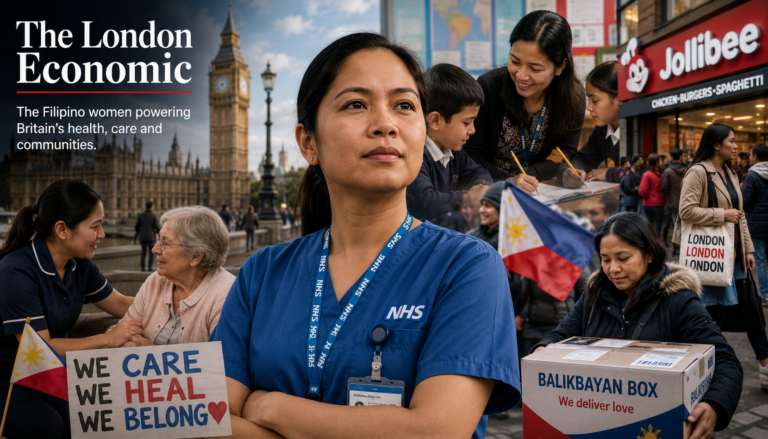
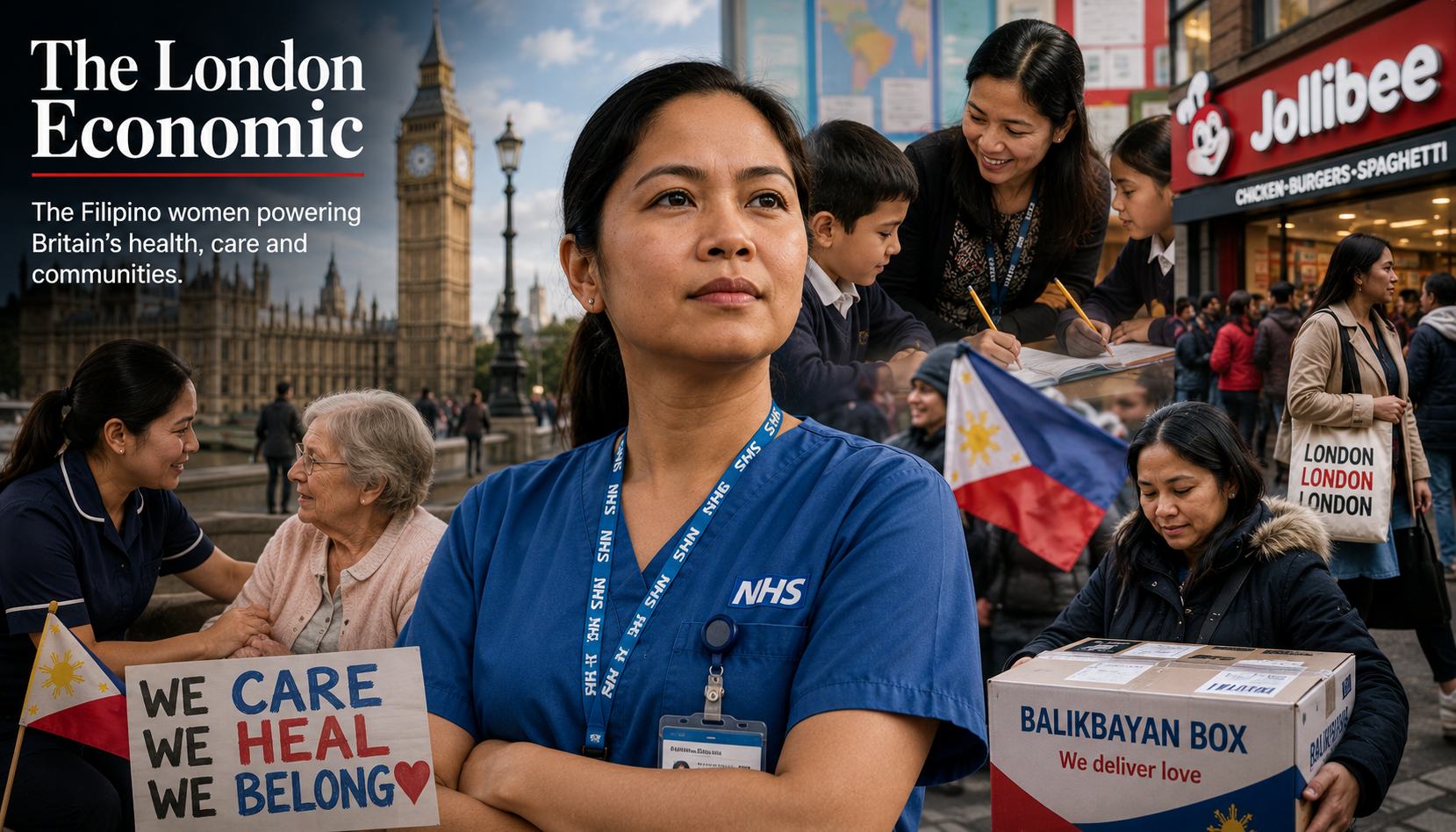
More than 164,000 people born in the Philippines now live in the United Kingdom, according to the 2021 census, making Filipinos one of Britain’s most significant but frequently overlooked diaspora communities. At the heart of that community are women, who form a substantial majority of the Filipino population in the UK and whose work, in hospitals, care homes, schools, businesses, and family homes, quietly underpins some of the country’s most essential services.
Yet despite their numbers and their contributions, Filipino women in Britain often describe themselves as invisible: present in enormous numbers, vital to the functioning of the NHS and the social care sector, and still somehow absent from the mainstream national conversation about immigration, identity, and belonging. This article aims to change that, at least in part, by telling the story of who Filipino women in the UK are, what brought them here, what they give, and what challenges they continue to face.
Who Are the Filipinos in the UK?
The 2021 census recorded 164,962 Philippines-born residents in the United Kingdom. Of these, 149,474 were in England, 6,245 in Scotland, 5,542 in Wales, and 3,701 in Northern Ireland. The Philippine Embassy estimates the total Filipino population, including UK-born children of Filipino heritage, at closer to 200,000.
Regionally, the community is concentrated in London, though significant populations have established themselves in Birmingham, Liverpool, Manchester, Bristol, Leeds, Southampton, Worthing, and Gloucester. In London, Earl’s Court has long been an informal hub of Filipino community life, home to the UK branch of Jollibee, the Philippine fast-food chain that functions as a cultural anchor for the diaspora worldwide.
The Filipino community in the UK is notable for two demographic characteristics. First, it is overwhelmingly female: women account for a substantial majority of Filipino migrants to Britain, a pattern driven primarily by the dominance of nursing and care work as migration pathways. Second, it is highly educated: the Philippines produces a large number of degree-qualified nurses, and the UK’s recruitment of Filipino healthcare workers has historically drawn from the upper tiers of that professional pool.
A History of Filipino Migration to Britain
Filipino migration to the UK was minimal until the late twentieth century. The community numbered approximately 18,000 in 1986, a figure that reflects the modest scale of economic migration from the Philippines to Britain during the preceding decades.
The growth of the community accelerated significantly from the 1990s onwards, driven primarily by active NHS recruitment of Filipino nurses to address chronic staffing shortages. Filipino men and women have been part of the UK’s health and care workforce since the 1970s, when Britain began systematic international recruitment to alleviate NHS nursing shortfalls. That pipeline, once established, became self-reinforcing: existing Filipino nurses created community networks that supported new arrivals and made the UK an increasingly attractive destination.
By 2010, the population had grown to an estimated 200,000. The pace of new arrivals accelerated again after Brexit, when the departure of a significant number of European healthcare workers created fresh demand for international recruitment, and again after the launch of the Health and Care Worker Visa in 2020, a scheme designed specifically to attract overseas healthcare professionals during and after the COVID-19 pandemic.
The pandemic itself was a defining moment for the Filipino community in the UK. Around 40,000 Filipino nurses are employed by the UK’s National Health Service, comprising the third-largest nationality in the NHS. During the crisis, Filipino nurses were lauded as “unsung heroes” in Britain’s fight against COVID-19. The lack of a Filipino ethnic category in the NHS staff record during COVID-19 made it hard to get accurate data on how many Filipinos died during the pandemic. To address this issue, Filipino nurses worked together to have their own ethnic identity included in the NHS staff record.
The NHS and Social Care: Where Filipino Women Keep Britain Running
The most significant and most quantifiable contribution of Filipino women in the UK is in healthcare and social care. The numbers are striking.
Estimates suggest that there are some 90,000 Filipino carers working in Britain. Filipino men and women have been part of the UK’s health and care workforce since the 1970s, when Britain actively recruited Filipino nurses to alleviate shortages in the NHS.
Their presence is so woven into the fabric of British social care that it can be easy to overlook how indispensable they have become, and how vulnerable the system is to the immigration policies that govern their ability to work and settle in the UK.
Beyond nursing, Filipino healthcare workers fill a remarkably broad range of roles. Apart from nursing and medical roles, many Filipino healthcare workers serve as healthcare assistants, caregivers, paramedics, administrative staff, and other key workers like hospital porters, chefs, and hospital maintenance staff, who are the backbone of NHS and healthcare institutions.
Several Filipino nurses have risen to senior leadership positions within the NHS. May Parsons is now associate chief nurse director for risk governance and compliance at Buckinghamshire Healthcare NHS Trust. Jennifer Caguioa is the first internationally educated senior nurse and head of global at the Florence Nightingale Foundation. Edmund Tabay is the first Filipino to be appointed director of nursing for a newly created mega trust.
These individual achievements are significant, but they sit against a broader picture of underrepresentation. Considering their number, however, their representation in NHS management remains low overall.
The Challenges Filipino Women Face in the UK
The contribution of Filipino women to British society is real and substantial. So are the challenges they face, and honest journalism requires giving both equal weight.
Pay and Professional Recognition
Many Filipino nurses come to the UK with extensive experience and qualifications, often having served in specialised or leadership roles in the Philippines or other countries. However, upon arriving in the UK, they may find themselves starting at lower pay bands or having to repeat certain qualifications to meet UK standards. This disparity can be frustrating, particularly when pay does not reflect the level of responsibility or skill they bring to the job.
Generally, in many countries, healthcare workers are not paid commensurate with what they do, as one Filipino nurse working in the UK observed during the pandemic. The irony of being celebrated as heroes during COVID-19 while earning wages that struggled to cover London living costs was not lost on the community.
Immigration Vulnerability
The Health and Care Worker Visa, launched in 2020, has been central to Filipino migration to the UK in recent years, but it has also created new vulnerabilities. In 2020, amidst a gaping shortage in healthcare workers that was poised to only worsen under Brexit, the UK launched the Health and Care Worker Visa to attract more foreign workers. The visa regime has been riddled with reports of unfair labour practices.
The structural problem is that visa-holder status ties workers to specific employers. When contracts end, workers face the threat of losing their immigration status alongside their income. Campaigners and unions representing Filipino care workers have repeatedly called for reforms that would decouple immigration status from individual employer sponsorship, particularly in the social care sector where contracts are often precarious.
Isolation and Mental Health
The absence of family support systems can contribute to feelings of isolation. As a result, Filipino nurses frequently rely on strong community networks within the NHS or local Filipino organisations for emotional and professional support.
This is not an abstract concern. The typical Filipino nurse who arrives in the UK has left behind a close-knit family structure in which multiple generations routinely live together and in which community ties provide day-to-day emotional sustenance. The transition to living alone, or in NHS-provided accommodation with fellow newcomers, represents a profound social adjustment that the healthcare system that recruits them rarely acknowledges or addresses.
The Brain Drain Debate
The recruitment of Filipino nurses by wealthier nations including the UK is not an unambiguous benefit. The Philippines faces its own serious healthcare staffing challenges, and the loss of trained nurses to international migration creates real gaps in domestic healthcare provision. The UK side is being “very mindful” of the importance of Filipino medical workers in dealing with the Philippines’ own “healthcare challenges.”
The Philippine government and the UK have engaged in formal discussions about what constitutes ethical and sustainable recruitment, an acknowledgement that the current arrangement, while economically rational for individual migrants and institutionally convenient for UK healthcare providers, creates costs that are borne primarily by Filipinos who remain in the Philippines.
Identity, Culture, and Community Life
The Filipino community in the UK has developed a rich cultural infrastructure across the decades, one that reflects both the depth of its roots and the ongoing effort required to maintain cultural identity at a distance from home.
Language
Tagalog, the basis of the Filipino national language, is spoken by approximately 60,899 people in England and Wales as a main language, according to the 2021 census. This makes it the most widely spoken Southeast Asian language in England and Wales, ahead of Thai, Vietnamese, and Malay. The community also uses a significant variety of regional Philippine languages, reflecting the linguistic diversity of an archipelago with more than 170 recognised languages.
Religion
The Filipino community in the UK is predominantly Roman Catholic, a faith inheritance from the Spanish colonial period that ran from 1565 to 1898. Catholic church attendance, Filipino-specific Mass services, and religious community organisations provide important social infrastructure for many members of the diaspora, particularly in areas with significant Filipino populations. The community also includes Protestant Christians and a smaller Muslim population, primarily from the southern Philippine island of Mindanao.
Food, Festivals, and Cultural Spaces
Filipino cuisine and cultural events provide important community anchors. Jollibee’s presence in London is genuinely culturally significant: the Philippine fast food chain, founded in 1978 and now one of the largest fast food chains in Asia, functions as a meeting place and cultural symbol in a way that goes considerably beyond its commercial function.
Annual festivals including Barrio Fiesta, a London-based Filipino cultural festival, draw thousands of attendees and provide a visible, celebratory expression of Filipino identity in Britain. Filipino community organisations, including the Filipino Nurses Association UK and various regional community groups, provide advocacy, mutual support, and social connection.
Filipino Women in British Public Life
Beyond healthcare, Filipino women have built careers and community roles across British public life.
In journalism, Tinig UK, a Filipino-British media outlet, has provided dedicated coverage of the community’s experiences since 2020, filling a gap that mainstream British media have largely left open. The outlet broke the story of the NHS’s failure to track Filipino COVID-19 deaths due to the absence of a Filipino ethnic category in workforce records, prompting changes in NHS data collection.
In business, Filipino entrepreneurs have established restaurants, remittance services, food import businesses, and healthcare staffing agencies serving both the community and the wider public. The balikbayan box industry, which ships care packages from the UK to families in the Philippines, has generated a small but significant commercial ecosystem serving the diaspora.
In education, Filipino parents are among the most highly engaged in UK state schools, a pattern that reflects cultural values around academic achievement that are deeply embedded in Philippine society. Filipino students consistently outperform national averages in educational attainment in the UK, a finding documented in Department for Education data on pupil outcomes by ethnicity.
Key Takeaways
- The 2021 UK census recorded 164,962 Philippines-born residents, with the Philippine Embassy estimating the broader community at approximately 200,000 including UK-born Filipinos.
- Filipino women form the majority of the UK’s Filipino community, driven primarily by nursing and care sector migration that began in the 1970s and accelerated sharply after Brexit and the COVID-19 pandemic.
- Approximately 40,000 Filipino nurses work in the NHS, making Filipinos the third-largest nationality in the NHS workforce, while an estimated 90,000 Filipinos work across British social care more broadly.
- Significant challenges persist: pay inequity on arrival, immigration vulnerability tied to employer sponsorship, social isolation, and underrepresentation in senior NHS roles despite decades of contribution.
- The community maintains strong cultural infrastructure through language, Catholic faith, food culture, and community organisations, with Tagalog the most widely spoken Southeast Asian language in England and Wales.
- The recruitment of Filipino healthcare workers by the UK raises legitimate ethical questions about brain drain from the Philippines, which the two governments are working to address through bilateral agreements on sustainable recruitment.
Frequently Asked Questions
How many Filipinos live in the UK? The 2021 UK census recorded 164,962 Philippines-born residents. The Philippine Embassy estimates the total Filipino community, including UK-born people of Filipino heritage, at approximately 200,000.
Why do so many Filipino women come to the UK? The primary pathway is healthcare and social care work. The UK has recruited Filipino nurses since the 1970s to address NHS staffing shortages, a pipeline that grew significantly after Brexit reduced the supply of European healthcare workers and accelerated further following the launch of the Health and Care Worker Visa in 2020.
How many Filipino nurses work in the NHS? Approximately 40,000 Filipino nurses are employed by the NHS, making Filipinos the third-largest nationality in the NHS workforce.
What challenges do Filipino women face in the UK? Key challenges include pay inequity on arrival (qualified nurses often start at lower pay bands than their experience warrants), immigration vulnerability linked to employer sponsorship under the Health and Care Worker Visa, social isolation from family networks, and underrepresentation in senior NHS management roles.
Where do most Filipinos in the UK live? The community is concentrated in London, particularly in areas including Earl’s Court, but significant Filipino populations exist in Birmingham, Liverpool, Manchester, Bristol, Leeds, Southampton, Worthing, and Gloucester.
What languages do Filipinos in the UK speak? Tagalog, the basis of the Filipino national language, is the most widely spoken, with approximately 60,899 speakers recorded as using it as a main language in England and Wales (2021 census). The community also speaks a wide range of regional Philippine languages reflecting the country’s extraordinary linguistic diversity.
Is the recruitment of Filipino nurses ethical? This is a genuinely contested question. The Philippine government and UK authorities have engaged in bilateral discussions about sustainable and ethical recruitment frameworks that acknowledge the cost of brain drain to Philippine healthcare. Individual migrants benefit economically, but the Philippines faces its own serious healthcare staffing shortages as a result of international emigration.
Conclusion
The story of Filipino women in the UK is one of the most important and least told stories in contemporary British social history. It is a story of extraordinary contribution: to the NHS wards that kept Britain alive during a pandemic, to the care homes that provide dignity to elderly residents, to the schools and businesses and community organisations that make cities function. It is also a story of persistent challenge: of wages that do not match qualifications, of immigration systems that create vulnerability, of a community that describes itself as invisible despite being indispensable.
The 164,000 Filipinos recorded in the 2021 census are not a footnote in British immigration statistics. They are doctors, nurses, carers, entrepreneurs, parents, and community leaders who have built lives in this country and contributed to it in ways that deserve acknowledgement and understanding rather than invisibility. As the UK continues to depend on international recruitment to sustain its healthcare workforce, and as the Filipino community continues to grow and deepen its roots in British society, that understanding becomes not just a matter of fairness but of informed public policy.
About the Author