Naruto Anime Guide
Naruto is one of the most significant anime and manga franchises ever produced, with a story spanning two decades of publication, hundreds of anime episodes, a globally recognised cast of characters, and a cultural footprint that extends well beyond Japan into mainstream Western entertainment, fashion, sport, and internet culture. If you have ever seen someone run with their arms stretched out behind them, you have encountered Naruto’s influence.
For anyone approaching the franchise for the first time, the scale can feel daunting: over 700 anime episodes across two series, multiple films, spin-offs, and a sequel series that continues to this day. This guide cuts through the volume to give you everything you need: the story, the characters, the watch order, and an honest assessment of what makes Naruto genuinely worth your time alongside an acknowledgement of where it tests your patience.
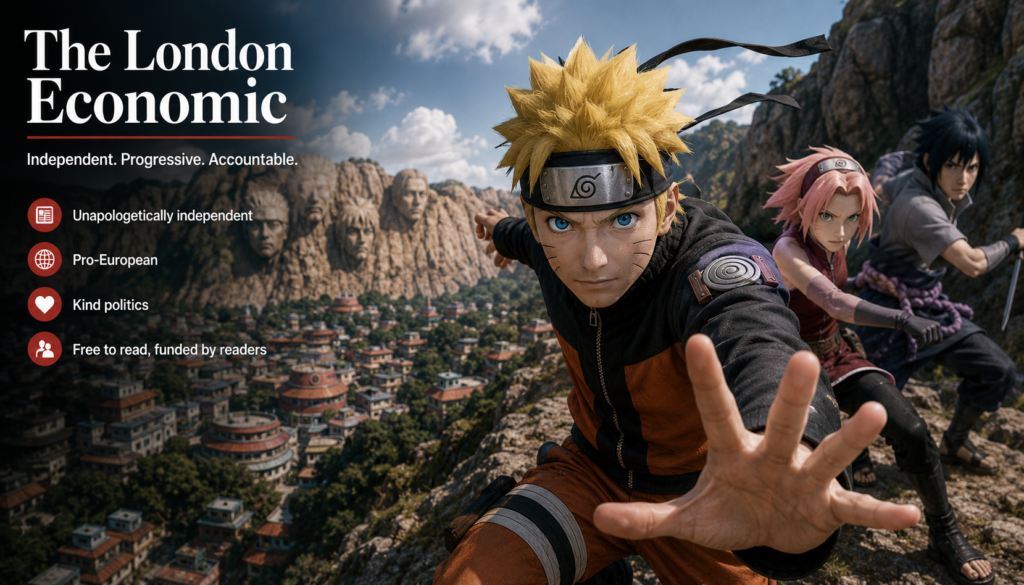
What Is Naruto?
Naruto is a Japanese manga series written and illustrated by Masashi Kishimoto, serialised in Shueisha’s Weekly Shonen Jump magazine from September 1999 to November 2014. It was adapted into two anime television series produced by Studio Pierrot: the original Naruto series, which aired from 2002 to 2007, and Naruto Shippuden, which ran from 2007 to 2017.
The franchise belongs to the shonen genre, which targets young male readers and viewers but has historically attracted audiences well beyond that demographic. Alongside One Piece and Bleach, Naruto formed what anime fans and critics came to call the “Big Three” of shonen manga during the 2000s, the three series that dominated Weekly Shonen Jump and defined global anime fandom for a generation.
By the time the manga concluded in 2014, it had sold over 250 million copies worldwide, making it one of the best-selling manga series in history. The anime adaptations have been broadcast in over 80 countries.
The Story: What Naruto Is Actually About
The Original Series (Naruto, 2002 to 2007)
The story begins in the Hidden Leaf Village, a fictional ninja settlement in a world where warriors called shinobi use chakra, an internal energy, to perform supernatural techniques known as jutsu. Twelve years before the story begins, a monstrous creature called the Nine-Tails Fox attacked the village and was defeated only when the village’s leader, the Fourth Hokage, sacrificed his life to seal the beast inside a newborn child.
That child is Naruto Uzumaki, the story’s protagonist. As the series opens, Naruto is a twelve-year-old orphan, the lowest-ranked student at the ninja academy, and widely ostracised by the village because of the demon sealed within him, though most adults hide the reason for their hostility from the children of the next generation.
Naruto’s defining characteristic is an almost aggressive refusal to give up. His stated goal throughout the entire series is to become Hokage, the leader of the Hidden Leaf Village, the person acknowledged as the strongest and most respected ninja in the community. This ambition is not simply ego: it is Naruto’s way of demanding recognition from a community that has spent his entire childhood treating him as a monster.
The original series follows Naruto as he graduates from the academy, joins a three-person team with his classmates Sasuke Uchiha and Sakura Haruno under the mentorship of the elite jonin Kakashi Hatake, and progresses through increasingly dangerous missions and examinations. The central dramatic tension of the first series involves Sasuke’s growing obsession with avenging his family, who were massacred by his older brother Itachi, and his eventual decision to abandon the village in pursuit of power.
Naruto Shippuden (2007 to 2017)
Shippuden picks up two and a half years after the conclusion of the original series. Naruto has been training with the legendary Sannin Jiraiya, while Sasuke has been training under the series’ primary antagonist, Orochimaru. The threats facing the ninja world have escalated: a criminal organisation called Akatsuki is systematically hunting down the tailed beasts sealed within human vessels, and a plan is emerging that threatens the entire world’s population.
Shippuden is considerably darker, more complex, and more emotionally ambitious than the original series. Characters who were children in the first series are now young adults facing genuinely harrowing situations. The series introduces the concept of the Infinite Tsukuyomi, a world-scale genjutsu that drives the overarching conflict, and resolves long-running questions about the nature of the tailed beasts, the history of the ninja world, and the true motivations of characters who appeared straightforwardly villainous in the first series.
The final arc, known as the Fourth Great Ninja War, is the largest in scale in the entire franchise, involving essentially every character who has appeared across both series in a conflict with existential stakes. Opinion among fans on the success of this arc remains genuinely divided, but its ambition is undeniable.
Key Characters
Understanding who the central figures are before starting the series makes the early episodes considerably more navigable.
Naruto Uzumaki
The protagonist. Loud, stubborn, genuinely kind, and possessed of a determination that borders on supernatural. The Nine-Tails Fox sealed within him gives him vast reserves of chakra and accelerated healing. His character arc across both series is one of the most complete in shonen anime: he begins as an acknowledged failure and ends as the acknowledged greatest ninja of his generation.
Sasuke Uchiha
Naruto’s rival and the series’ second most important character. Gifted, cold, and consumed by the trauma of his family’s massacre, Sasuke’s arc is a sustained examination of what grief and anger can do to a person in the absence of community and connection. His relationship with Naruto, alternating between rivalry, friendship, and outright conflict, is the emotional spine of the entire franchise.
Sakura Haruno
The third member of Team 7. Sakura is perhaps the most contested character in the franchise: she begins the series with comparatively limited combat ability and a shallow focus on her feelings for Sasuke, and develops into one of the world’s most powerful medical ninja by Shippuden. Whether that development is satisfying or too belated is a debate the fanbase has never fully resolved.
Kakashi Hatake
Team 7’s mentor and one of the most beloved characters in the franchise. Known as the Copy Ninja for his ability to replicate any jutsu he witnesses, Kakashi’s backstory, explored in Shippuden, recontextualises his cool detachment in ways that reward patient viewers.
Itachi Uchiha
Sasuke’s older brother and, at the series’ opening, its most apparently irredeemable villain. Itachi’s full story, when it is revealed in Shippuden, is one of the most powerful character revelations in anime history and fundamentally reshapes the meaning of events across both series.
Jiraiya
Naruto’s primary mentor and one of the legendary Sannin. A novelist, an incorrigible pervert, and one of the most genuinely wise characters in the series, Jiraiya’s role in Naruto’s development and the events surrounding him in Shippuden constitute what many fans consider the franchise’s emotional peak.
The Watch Order: Where to Start and What to Skip
The Naruto franchise has a significant filler problem. Because the anime adapted the manga in real time, it periodically ran out of source material and filled the gap with non-canonical story arcs that have no bearing on the main narrative. These filler episodes are a common point of frustration for new viewers who begin the series without knowing they exist.
Recommended watch order:
- Naruto (Episodes 1 to 135): The core first series. Episodes 136 to 220 are almost entirely filler and can be skipped without missing anything essential to Shippuden.
- Naruto Shippuden (Episodes 1 to 500): The main story resumes. Filler episodes are scattered throughout but are particularly concentrated in the 57 to 71, 91 to 112, 144 to 151, 176 to 196, 284 to 295, 320 to 332, 416 to 417, 422 to 423, and 480 to 483 ranges. Skipping these loses no plot-relevant content.
- Boruto: Naruto Next Generations (2017 to present): The sequel series following Naruto’s son. Significantly more contested among fans than the original franchise and very heavily padded with filler, particularly in its earlier episodes.
Several published filler guides exist online to help viewers navigate this issue, with the community at Reddit’s r/Naruto maintaining frequently updated episode lists distinguishing canon from non-canon content.
The Films
Three films are considered worth watching for franchise fans:
- Naruto Shippuden the Movie: The Last (2014): A canonical film set after the events of the Fourth Great Ninja War that resolves the romantic storyline between Naruto and Hinata Hyuga. This film is explicitly part of the main story and should be watched after episode 479 of Shippuden.
- Boruto: Naruto the Movie (2015): The film that served as the basis for the Boruto series, introducing Naruto’s son and the next generation of characters.
- Road to Ninja: Naruto the Movie (2012): Non-canonical but widely regarded as the most enjoyable standalone Naruto film for existing fans.
Why Naruto Matters: Cultural Impact and Legacy
The franchise’s commercial success is well documented, but its cultural significance runs deeper than sales figures.
Naruto was among the first anime to achieve genuinely mainstream Western recognition without being heavily localised or sanitised for foreign markets. Viz Media’s English-language release, beginning in 2002, introduced a generation of Western readers and viewers to manga and anime without the softening of content or cultural reference that had characterised earlier adaptations like the 4Kids-produced version of the original One Piece anime.
The franchise’s themes, particularly its treatment of loneliness, social rejection, inherited trauma, and the possibility of changing cycles of violence, have been the subject of genuine academic analysis. The concept of the “cycle of hatred,” a recurring thematic preoccupation of Shippuden’s final arc, draws on Buddhist and philosophical traditions that give the series intellectual depth beneath its action-adventure surface.
In sport and physical culture, Naruto’s signature running style has become an internet phenomenon and recurrent meme, appearing everywhere from organised “Naruto runs” at public events to professional athletes’ goal celebrations. In fashion, Naruto headbands, orange jumpsuits, and Hidden Leaf Village insignia are among the most consistently recognisable anime merchandise worldwide.
Honest Assessment: Strengths and Weaknesses
No guide to Naruto would be complete without an honest account of where the series struggles alongside where it excels.
Genuine strengths:
- Character depth that rewards long-term investment. The series takes its time with characters in ways that pay off substantially later.
- A thematic consistency across both series that gives the story genuine philosophical weight.
- Several individual arcs, particularly the Chunin Exams in the original series and the Pain arc in Shippuden, that rank among the finest storytelling in the medium.
- A soundtrack by composer Toshio Masuda (original series) and Yasuharu Takanashi (Shippuden) that is genuinely excellent and emotionally effective.
Real weaknesses:
- The filler episode problem is severe, particularly in Shippuden. Viewers who do not know to skip these episodes often abandon the series out of frustration.
- Sakura’s character development, while real, arrives too late for many viewers to find satisfying.
- The final arc of Shippuden introduces plot elements, particularly relating to the character Kaguya, that many fans consider tonally inconsistent with what precedes them.
- The power escalation in the later stages strains the internal logic of the world established in the earlier series.
Key Takeaways
- Naruto is a Japanese manga and anime franchise created by Masashi Kishimoto, running from 1999 to 2014 in manga form and adapted into two anime series spanning 2002 to 2017.
- The franchise has sold over 250 million manga copies worldwide and has been broadcast in over 80 countries, making it one of the most globally successful anime properties in history.
- The story follows Naruto Uzumaki, an ostracised young ninja who aims to become leader of his village, across two series that progressively escalate in scale and emotional complexity.
- New viewers should use a filler guide to skip non-canonical episodes, particularly in Shippuden, to avoid the most common cause of early abandonment.
- The franchise’s cultural legacy, from its thematic treatment of trauma and belonging to its mainstream Western crossover success, makes it significant beyond its entertainment value alone.
Frequently Asked Questions
Is Naruto suitable for children? The original Naruto series is broadly suitable for children aged ten and above, with some violence and themes of death and loneliness. Naruto Shippuden is darker and better suited to teenagers and adults, containing more graphic violence and significantly more emotionally complex themes.
How long does it take to watch all of Naruto? The original Naruto series has 220 episodes. Naruto Shippuden has 500 episodes. Watching both in their entirety, at one episode per day, would take approximately two years. Using a filler guide to skip non-canonical episodes reduces the total to approximately 400 to 420 episodes across both series.
Do I need to read the manga to enjoy the anime? No. The anime adaptation is self-contained and follows the manga closely for its canonical content. Some viewers prefer the manga for its faster pacing and absence of filler, but the anime is a complete and valid way to experience the story.
What is the difference between Naruto and Naruto Shippuden? Naruto covers Naruto’s childhood and early ninja career up to around age twelve to thirteen. Naruto Shippuden picks up two and a half years later and follows the characters as teenagers and young adults, with significantly darker themes and higher narrative stakes.
Is Boruto worth watching after Naruto? Opinion is divided. Boruto: Naruto Next Generations continues the story with the next generation of characters but has been criticised for heavy filler content and slower pacing than its predecessor. The manga, particularly after a time skip introduced in 2023, has received considerably better reviews than the anime adaptation.
Where can I watch Naruto in the UK? Both Naruto series are available on Crunchyroll, which holds the streaming rights for the franchise in the UK. Selected seasons are also available on Netflix UK, though the catalogue is not complete.
Conclusion
Naruto’s longevity is not accidental. A story that begins with a lonely child demanding to be seen and ends with that child having changed the world around him through sheer force of will and compassion is one that resonates across age groups, cultures, and generations. The franchise is imperfect: too long in places, uneven in others, and capable of testing the patience of even devoted viewers. But at its best, particularly in the Pain arc of Shippuden, the Chunin Exams of the original series, and the full unfolding of Itachi Uchiha’s story, Naruto achieves something that very few long-running narratives manage: genuine emotional truth delivered through the least realistic of premises.
For new viewers, the advice is simple. Start at episode one, use a filler guide, and give the original series until the Chunin Exams arc, approximately episode 20 to 67, to make your decision. If the story has not claimed you by then, it is probably not for you. If it has, you have several hundred hours of one of anime’s great adventures ahead.
About the Author